Guides
How to Promote a Paid Newsletter on Instagram With a Sample Issue

To promote a paid newsletter on Instagram, offer a representative sample issue, invite readers to request it with a clear comment keyword, and deliver the reading link by DM. Let readers evaluate the full sample before choosing a paid subscription on your newsletter platform.
Published by ReplyMagnet · Last updated
The sample should show what a normal subscriber actually receives. An Instagram follower may like your opinions but still need to judge the depth, usefulness and reading commitment before paying. Choose one complete edition, show a useful extract in the post, and keep the paid offer clear at the end of the sample.
ReplyMagnet can handle the Instagram request and resource delivery. Your newsletter platform handles the publication, subscription status and payment. The editorial decisions between those steps deserve as much attention as the automation. Here is how to choose a sample that sells an accurate picture of the paid product.
Choose the issue that represents a normal paid week
Start by writing the recurring promise in one sentence.
“A weekly briefing for independent bookshop owners” names an audience and schedule, but leaves the value vague. “Every Friday, one buying decision explained with examples, supplier questions and a practical next step” tells a potential subscriber what they would use.
Then review three or four recent editions against that promise. Look for an issue that stands alone, demonstrates your usual depth and resembles what you can reliably publish. A spectacular special report may attract interest while setting an impossible expectation for ordinary weeks. A short teaser may be easy to finish but conceal the very thinking people would pay for.
Choose with these questions in mind:
Can a first-time reader understand the issue without reading last month’s archive?
Does it show the recurring sections and approximate length of the paid publication?
Is the distinctive value visible in the analysis, selection, reporting or examples?
Can you share every included image, quotation and contribution in a public preview?
For a curated newsletter, preserve the commentary that makes the selections worth reading. For reported work, show the sourcing and relevant limitations. For practical advice, include a worked decision. An attractive list of topics helps explain coverage, but readers also need to experience your editorial judgment.
Decide whether freshness or longevity matters more
An evergreen issue is easier to keep in circulation.
A newsletter about running a photography business could preview a durable edition on preparing a shoot brief. The reader can judge the writing months later without wondering whether the opportunity has passed. Give it a visible original publication date and review it when the underlying advice changes.
A current issue is stronger when timeliness is part of the paid value. A local culture newsletter may need this week’s reporting to demonstrate why readers subscribe. In that case, a sample campaign creates a maintenance commitment: update the edition, its description and any date-specific Instagram promise together. “This week’s issue” becomes misleading as soon as the week changes.
A useful middle option is a dated archive issue with a short introduction explaining what remains representative. For example: “Originally published in April. This sample shows our usual reporting format; the event listings are historical.” Preserve the distinction between an archive preview and current advice.
Keep one stable sample during the first promotional test unless accuracy requires a change. Replacing it after every post makes it harder to distinguish the effect of the post from the effect of the issue. When you do change it, record the version and date so later results have a meaningful context.
Show the paid value without hiding the useful part
Decide exactly what the sample includes.
A complete archive edition often gives the clearest demonstration of a paid newsletter. Readers can experience the opening, argument, examples and conclusion. You are giving away one edition while selling the ongoing publication, its future coverage and any other benefits you actually provide.
If you use an excerpt, label it as an excerpt. Keep a complete useful section, and identify what has been omitted. Cutting immediately before the answer turns the preview into an advertisement. That can still attract clicks, but it provides weaker evidence of whether someone will enjoy the paid reading experience.
State the free and paid boundaries beside the sample. Does the free tier receive occasional public posts or a shorter weekly edition? Does payment unlock every issue, only certain editions, or the archive? Can existing free readers inspect the sample without joining another list? Answer those questions before adding a subscription button.
Avoid making a preview look bigger than the publication. If subscribers receive an email essay, a beautifully designed forty-page sampler may imply a different product. Preserve the regular headings and reading length. Explain any format change made for the preview, such as converting an email into a mobile-friendly web page.
A fictional specialist newsletter example
Consider The Small Shop Letter, a fictional paid newsletter for owner-run homeware shops in the United States and Europe.
Its invented offer is one practical buying or merchandising edition each Friday, plus the paid archive, for US$12 a month. The example illustrates editorial choices; it is not a customer story or a performance claim.
The editor chooses an archive issue called “Should those slow-selling mugs keep their shelf space?” It reflects a recurring reader decision, needs no knowledge of earlier editions and contains a complete worked example. The sample keeps the usual structure: the situation, what the numbers suggest, what remains uncertain and one small test.
The central passage could read:
“Imagine a shop received 24 ceramic mugs eight weeks ago and has sold six. Eighteen remain. The observed pace is 0.75 mugs a week, so the remaining stock represents 24 weeks of sales at that pace. That calculation describes what happened during these eight weeks. It is not a forecast of the next six months.
“Before changing the price, ask what shoppers have actually encountered. Have the mugs been visible? Could someone pick one up comfortably? Did the display explain the maker, size and intended use? Note any stock interruptions or unusual trading days, too.
“For the next two weeks, keep the price unchanged and move the mugs to a clearly visible, comparable display. Record the dates, units sold and any other changes in the shop. Write down relevant customer questions without recording personal details. If a promotion, holiday or different opening schedule overlaps, include that in your notes.
“At the review, compare what you observed with the original question. More sales during the new display would be a reason to investigate the presentation further, but this small test would not isolate every cause. Little change would leave price, product fit and demand unresolved. Decide what you need to learn before reordering another batch.”
This passage gives away useful thinking. It also demonstrates the paid publication’s pace and restraint. The issue’s final section could list the observations to bring to the next buying review. It should deliver that promised conclusion before asking anyone to subscribe.
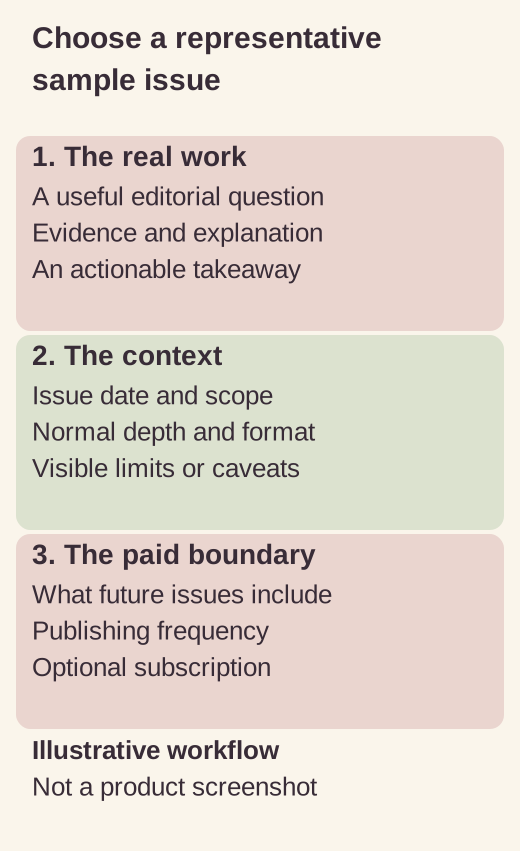
Illustrative workflow; not a product screenshot or customer result.
Write an Instagram invitation that previews the reading
Build the post around one decision from the issue.
The Small Shop Letter could use a carousel showing the fictional stock figures, the difference between an observation and a forecast, and the questions to ask before discounting. The post has a complete takeaway; the sample adds the full reasoning and review plan.
A caption for direct access could say:
“Six mugs sold in eight weeks. Eighteen still on the shelf. Would you discount them, move the display or wait? This fictional shop example shows why I would check presentation before changing the price. Comment SAMPLE for a complete archive edition of The Small Shop Letter, my paid weekly newsletter for independent homeware shops. I’ll DM the reading link. No email signup is needed to read this sample.”
That last sentence must match your settings. For this first test, leave the contact gates off and let the reader reach the issue directly. ReplyMagnet’s capture guide explains how enabling a field changes that route. If you later require an email, update the invitation before the campaign changes.
Keep the public reply short: “Look in your DMs for the sample issue link.” The private message can say: “Here’s the complete sample issue of The Small Shop Letter: ‘Should those slow-selling mugs keep their shelf space?’ Open the link to read it. The sample also explains what the paid weekly subscription includes.”
Attach the resource to the campaign so the delivery link accompanies the message. Avoid adding a second request to follow, share and subscribe before the reader has seen the sample. Someone commenting SAMPLE has asked for this issue. That request alone is not an instruction to enroll them in a newsletter or send ongoing marketing.
Make the reading page and subscription page work together
Host the sample where someone can read it on a phone without needing your account permissions.
A public web version can resemble the newsletter’s normal typography and make links easy to follow. A PDF is useful when the edition’s layout matters, provided the text remains comfortable to read without constant zooming.
ReplyMagnet supports PDFs up to 25 MB and external link assets on Basic or above. The DM contains a delivery link. Check the asset instructions for the current options, then test the destination as a reader who is signed out of your publishing account.
At the top of the sample, identify the publication, issue title, original date and whether the edition is complete. Place a concise subscription invitation after the conclusion. Link to the exact public page where people can review and buy the relevant subscription, rather than an account dashboard or a generic platform homepage.
For the fictional newsletter, the closing invitation might read: “Want this kind of buying and merchandising analysis each week? The Small Shop Letter sends one full edition every Friday and includes the paid archive. The subscription is US$12 per month. Review the subscription details and join on our newsletter site.” Link the final sentence to your real offer page.
The destination should explain the actual billing currency, renewal schedule, included content and applicable cancellation or refund terms. For readers across the United States and Europe, make the displayed currency unambiguous and check how the platform presents any taxes and local payment options. Describe the checkout you actually use; do not imply every reader will see an identical total.
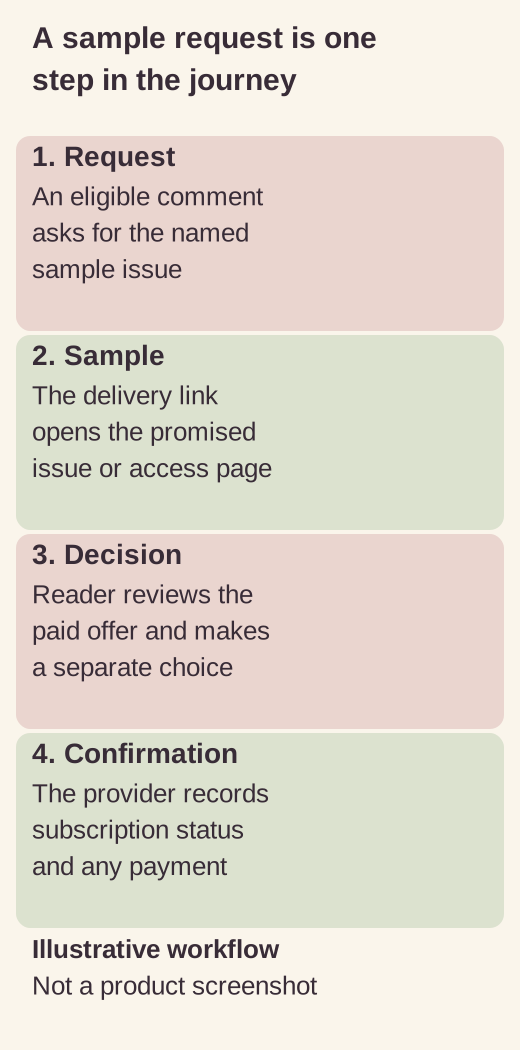
Illustrative workflow; not a product screenshot or customer result.
Choose the paid offer before testing a discount
Use the sample to answer a product question before testing a pricing tactic: does this reader want the regular publication at its normal price?
A temporary discount changes the decision and adds an expiry date to maintain across the post, sample and checkout. It can also distract from whether the edition accurately represents the product.
If you offer monthly and annual plans, explain each commitment clearly on the destination page. Keep the sample’s invitation simple enough that the reader can understand the next step. If annual membership includes a separate benefit, name it only if you can consistently provide it. Avoid adding a community, personal feedback or live sessions merely to make the subscription sound larger.
Match the invitation to the publication’s maturity. A newsletter with an established archive can show what is already available. A new publication should distinguish published issues from planned coverage. Announce an intended topic as a plan, without presenting an unwritten edition as something the buyer can access immediately.
A reader may decide the sample is useful but the ongoing subject is too narrow, the schedule too frequent or the price unsuitable. Those are meaningful findings. Ask willing readers what they expected to receive and what remains unclear. Use their answers to improve the offer’s description before assuming the solution is a cheaper subscription.
Keep requests separate from paid subscribers
Record the stages you can actually observe: sample requests, delivered messages, sample-link activity and completed paid subscriptions.
ReplyMagnet’s analytics guidance distinguishes campaign activity from outcomes recorded elsewhere. Use your newsletter platform’s subscription and payment records to establish who became a paying reader.
A link open does not prove someone finished the issue. An email address does not prove a confirmed subscription. If you later use Mailchimp or Kit sync, inspect the destination contact and confirmation settings; email sync moves contact data, while the email platform manages confirmation and sends. Keep sample access and optional ongoing email choices explicit.
Use a campaign-specific destination link or source field if your publishing platform supports it. Test whether that information survives the path to subscription. Record where attribution is missing instead of crediting every new subscriber to Instagram. A person may read the sample on one device and join later through another route.
Choose a reporting period before promotion and apply it consistently. Separate your test accounts and existing subscribers where the available data allows. A successful initial payment answers one question; renewal and cancellation records answer whether the publication keeps its promise over time. Review those later in the newsletter platform without treating a small early cohort as a reliable prediction.
Run a small test with a clear acceptance record
First verify the mechanics.
Use a second Instagram account to make a valid SAMPLE request and an unrelated comment. Open the received link, read the issue and follow the paid-subscription invitation. The campaign setup guide covers trigger behavior and overlapping campaigns. Do not judge the offer while a delivery problem is preventing people from reaching it.
Then ask a few willing readers who match the intended audience to inspect the sample. Ask what they expect a typical paid edition to contain, how often they expect it to arrive and what they believe the subscription costs. A mismatch between their answers and your intended offer points to a specific explanation to improve.
For the first public test, keep the issue, price and destination consistent. Compare two post angles only if you can keep their other conditions reasonably similar. Record reach, timing and material differences; ordinary Instagram posts do not create a controlled experiment. Decide beforehand whether the purpose is to check comprehension, generate sample requests or evaluate paid-subscription interest.
Choose the ReplyMagnet plan around that test. The 30-day trial includes Pro features, no card requirement and a total allowance of 1,000 engagements. Afterward, the free Starter plan permits 1,000 engagements monthly, one connected account and one live campaign. Basic is $9 monthly and adds external link assets and native Mailchimp or Kit sync. Pro is $29 monthly and adds webhooks and branding removal. Check the current plan details before relying on a trial feature afterward.
A matched comment’s public reply and DM share one engagement; a repeat matching request can consume another. Monitor the workspace allowance and delivery status during promotion. Queued activity is still pending, and delivery remains subject to account eligibility and messaging limits.
Maintain the preview as part of the publication
Give the sample an owner and a review trigger.
Check it when the subscription price, publishing schedule, archive access or editorial promise changes. Review date-sensitive examples before promoting the post again. The sample, Instagram caption and purchase destination should describe the same product.
When replacing a PDF in ReplyMagnet, upload the revised file as a new asset and select it in every relevant campaign. Existing delivery links remain attached to the original asset. Check a fresh request after the change and remember that a corrected campaign cannot rewrite a copy someone already saved.
For The Small Shop Letter, the useful outcome is a reader who can say: “I understand the kind of decisions this newsletter covers, I have seen a complete edition, and I know what paying gets me.” Build that understanding first. Then the subscription invitation has a clear job, and your campaign results become easier to interpret.
Review the Instagram messaging rules before planning reminders; a sample-link open is not a DM response.
Common questions
Should I offer a complete issue or an excerpt?
A complete representative issue lets readers evaluate the normal publication. An excerpt can work when it contains a useful complete section and clearly identifies what is omitted. Avoid cutting off the promised answer solely to force the purchase.
Does requesting the sample subscribe someone to the newsletter?
No. The sample request asks for that resource. Keep ongoing newsletter signup explicit and verify confirmation status in the newsletter platform. An email captured along the way is not automatically a confirmed paid subscription.
Can I promote a sample on the free ReplyMagnet plan?
Starter can deliver a hosted PDF sample. A campaign whose asset opens an external sample page needs Basic or above after the trial. Check that any links inside the sample lead to the intended public reading and subscription destinations.
Can I keep sending subscription reminders in Instagram DMs?
Do not treat the original comment as permission for an indefinite message sequence. Follow the applicable Instagram messaging rules. Opening the sample link or subscribing on a website should not be treated as an Instagram DM response.
Where should I measure paid newsletter conversions?
Use the newsletter platform’s confirmed subscription and payment records. State how those records are attributed to the campaign and keep missing attribution visible. Sample requests and resource openings are useful earlier observations, not evidence that a person paid.