Guides
Make an expired Instagram offer understandable everywhere
An offer does not disappear when its deadline passes. Old posts, saved messages and shared links can keep bringing people to it. Give those visitors an accurate explanation of what ended and what, if anything, they can do next.
Published by ReplyMagnet · Last updated
End the promise, not just the campaign
When an offer closes, align the public wording, new replies and destination. Pausing new delivery alone does not explain the offer’s status to someone following an older link.

Generated editorial illustration of changing an offer notice. It is not a real event, closure notice or product screenshot.
Imagine a fictional weekend ceramics workshop whose registration has closed. The organizer stops promoting it, but a saved Instagram post still says “Get your place.” A person follows a DM from earlier in the week and reaches a registration page with no clear status. They cannot tell whether the event is full, over or temporarily unavailable.
The repair is a coordinated information change. The post should stop implying that the old action remains available. Any new response should state the current status. The destination should explain the closure to people who arrive through old messages or shared links.
This is an operational communication task. It is different from auditing a whole resource library to decide what to keep or retire. Here, you already know the particular offer is ending and need to make that transition understandable.
Do not rely on the audience remembering the original deadline. People may find a cropped image, read a caption quickly or see the content long after publication. Put the status where the decision occurs.
ReplyMagnet does not need to be described as a stock synchronization or automatic expiry system for this work. The business can maintain its offer information and delivery configuration deliberately, with a named person responsible for the change.
Choose a single authoritative status
Decide what has ended, the effective date and the truthful next option. Use that decision consistently instead of improvising different explanations in each channel.
“Closed” can mean several things. Registration may have ended while the event is still upcoming. A promotion may have expired while the underlying product remains available at its ordinary price. A resource may have been withdrawn entirely. State the actual condition.
For the fictional workshop, the authoritative status could be: “Registration for the named workshop has closed. Existing confirmed attendees should use their confirmation information. People interested in a future workshop can use the separate update page.” That statement separates current attendees from new prospects.
Do not redirect everyone to the next event without explanation. A person following an old link may reasonably believe the new page describes the original date or terms. If there is a successor offer, label it clearly as a different offer.
If there is no next offer, say so. “No future date is confirmed” is more useful than an indefinite “coming soon” if the team has made no plan. You can provide a contact route for questions without inventing a waiting list or a priority promise.
Record the effective time and relevant time zone when a deadline matters. “Tonight” and “midnight” become ambiguous when messages are shared across locations or read later. Use an actual calendar date in the final real copy.
The W3C writing guidance supports clear instructions and meaningful labels. The application here is simple: name the ended offer and the available action, rather than sending people through a vague error message.
Trace the routes an old visitor can still use
Check the original post, active reply, resource asset and final destination. Include saved messages and shared links in the review, because those may bypass the updated entry point.
Draw the route as the visitor experiences it. A comment on an old post may trigger a new reply. A saved DM may open a previously delivered asset. A friend may share the external destination directly. Each route can reach a different version of the information if you update only one layer.
For a real campaign, make a short route list with the actual post and destination references. Do not copy subscriber information into the list; you need the paths, not a collection of people’s private conversations.
Check whether changing the asset affects old deliveries. ReplyMagnet’s asset documentation distinguishes new requests from links already delivered: replacing the resource affects new deliveries, while older links retain their original target. Updating an asset therefore does not rewrite every past message.
That makes the destination especially important when you control it. A maintained webpage can explain the offer’s current status to people arriving through old references. If the old destination cannot be changed, decide how you will handle questions and whether the public post needs a more prominent correction.
Do not assume deleting a post removes all copies or saved links. Equally, do not remove a destination simply to eliminate the old offer if that leaves confirmed customers without information they still need. Separate the prospect-facing closure from ongoing customer support.
The lead magnet delivery guide explains delivery context. The closing task is to inspect what each existing route now communicates, not merely whether the URL loads.
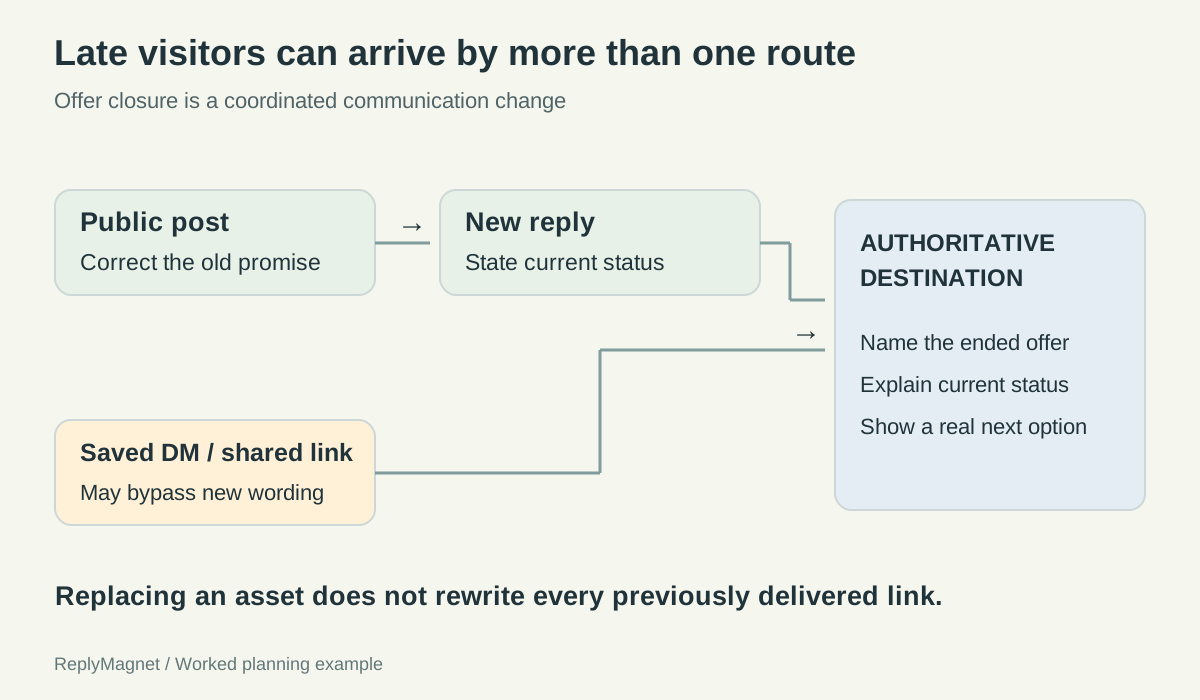
Original offer dependency map. Check the actual old destination as well as new replies; no automatic expiry or retroactive message editing is implied.
A closing-time runbook with a visible owner
Prepare the new wording and destinations before the deadline, then verify them after the change. Record who handles each layer and who checks the complete visitor journey.
The sequence below is a suggested manual runbook. It does not claim that ReplyMagnet schedules or performs these steps automatically. Adapt it to the systems and people responsible for your offer.
Before closing, agree the exact status and prepare the replacement copy. Check that the next destination exists and means what the reply says it means. If there is a future-interest form, make its purpose clear and keep it separate from a reservation.
At the closing point, the registration or offer owner changes the authoritative destination first or coordinates it with the other changes. The content owner updates visible promotional wording and scheduled material. The campaign owner checks the response that new requests will receive.
Afterward, another person follows the old and new routes using a controlled test. They should check meaning as well as functionality. A successful redirect can still take someone to the wrong offer without warning.
Keep a short completion record. If a layer cannot be changed, record the limitation and the practical response. That is better than marking the entire transition complete because the main page was updated.
Manual closing runbook for the fictional workshop. Roles are responsibilities, not native product features.
Moment
Before the deadline
- Action
- Approve closed-state wording and real next option
- Evidence to keep
- Reviewed copy and destination
Moment
At closure
- Action
- Set the authoritative registration status
- Evidence to keep
- Page check with effective time
Moment
At closure
- Action
- Update active post/reply wording
- Evidence to keep
- Links or controlled screenshots
Moment
After changes
- Action
- Follow old DM and public-link routes
- Evidence to keep
- Observed destination and status
Moment
After verification
- Action
- Record unresolved routes and owner
- Evidence to keep
- Small exception list
Moment
Next working review
- Action
- Inspect confusion reported by visitors
- Evidence to keep
- Specific questions and corrections
Before-and-after copy for the fictional workshop
Replace an unavailable action with a precise status and a relevant alternative. Keep the original offer identifiable so readers understand why the message changed.
These examples are invented wording exercises, not real event notices.
Old caption: “Comment CLAY to book your place at our weekend workshop.”
This wording also confuses a comment with a booking. A closed-state caption could say: “Registration for this ceramics workshop has closed. This post describes the past offer. For questions about an existing confirmed booking, use the contact details in your confirmation.” If a future-update page exists, add a clearly labeled link or action for that separate purpose.
Old automated reply: “Here’s the booking link. We can’t wait to see you.”
A new response could say: “Registration for this workshop has ended. If you already have a confirmed place, follow the information in your confirmation. If you want to hear about a future workshop, the update page explains what you can sign up for.” Include only a real maintained destination.
Old destination: A form that still accepts details but cannot create a valid registration.
The corrected destination should state the closed status before asking for any new information. If the page offers future updates, label that form as a new purpose. Do not let the old “Register” button quietly become an update signup.
Old error: “Something went wrong.”
A more useful message is: “Registration has closed for this event.” If the closure is intentional, do not present it as a technical fault. Give the relevant contact or next option according to the person’s situation.
The exact wording will depend on your offer. The consistent principle is that the new message should answer the question a late visitor actually has: “Can I still do the thing this post promised?”
Check for confusion after the transition
Review the questions people ask after closure and correct the layer that caused the misunderstanding. Do not assume every late enquiry means the visitor ignored the deadline.
A person asking whether they are booked may have seen an ambiguous acknowledgement. Someone asking why the price changed may have reached an ordinary product page from an expired promotion without an explanation. Trace the path before blaming attention or intent.
Keep a small list of repeated misunderstandings and their originating routes. You do not need a complicated dashboard to identify that an old reply still says “your place” or that a page title omits the event date.
For a promotion with an ongoing product, state that the promotional terms ended while the product remains available under current terms. For an event that has occurred, preserve any necessary attendee information and make the historical status clear. For a withdrawn resource, explain the withdrawal if you control the destination and can provide a useful alternative.
Avoid promising retroactive changes to links or messages you cannot edit. Be specific about the correction you made and the routes that remain outside your control.
The ecommerce guide can help when the next task is maintaining buyer resources. For this closure, the completion test is narrower: a new visitor and someone with an old link should both understand what is available now, without accidentally joining or requesting something different.