Guides
Choose the next action before writing the Instagram caption
A reader comparing two jacket sizes needs a different next step from someone ready to buy. Asking both people to comment GUIDE is convenient for the campaign owner, but it may leave one of them doing unnecessary work.
Published by ReplyMagnet · Last updated
What is the person ready to do?
Choose the call to action by the next useful customer decision. A request for information, a private enquiry and a completed purchase need different paths.
Begin with a sentence you could say about the reader: “They understand the product, but need the measurements before choosing a size.” That describes a specific gap. “We want more comments” describes your reporting preference.
Five common decisions illustrate the difference. Someone may want to save instructions for later, compare options, explain a personal situation, check whether something is available, or pay for a choice already made. These needs can appear under similar-looking posts, but they do not all benefit from the same action.
For a recipe demonstration, a request for the ingredient sheet can complete the lesson. For a product with a clear size and price, a direct route to the product page may be enough. For a bespoke service, a private enquiry can let the person describe what they need without posting details publicly.
Write the destination as well as the action. “Send a DM” is incomplete until you know what follows. Will the person receive a resource, choose between services, or wait for a reply from the business? The caption should not promise instant personalized advice if the actual response is a generic menu.
There is no conversion result established by these examples. They are a way to choose a coherent journey before testing it. Nor should you assume that asking for a comment gives a post special treatment by Instagram's recommendation systems.

Editorial illustration. The routes are design options, not measured performance rankings.
Compare the three routes by what they ask of the reader
A comment makes a request public, a DM starts a private interaction, and a website link takes the person to a destination. Evaluate the whole journey, including the answer after the first action.
A comment request is useful when the offer is simple enough to name publicly: a checklist, measurement sheet or recipe. The person can ask for the same item other readers are requesting. That simplicity is lost if the caption asks them to explain an account problem or disclose personal circumstances in the thread.
A DM is suitable when the conversation needs a private start or a short clarification. It still requires attention from the reader. Do not add a private step just to place a public price behind a conversation. If the answer is already on a clear page, consider directing people there.
A website destination can support browsing, comparison or checkout without requiring a message. Its usefulness depends on the actual page. A general homepage with five competing offers may be harder to navigate than a focused resource response. Test the specific destination rather than deciding that all website links create friction.
These are editorial tradeoffs, not a universal order from best to worst. The comment-to-DM guide explains how the request mechanism works once you have chosen it.
A decision matrix for the next action
Reader task
Get the public sizing sheet
- Route to consider
- Comment a clear resource word
- Question to check
- Does the resource answer the post’s exact sizing question?
Reader task
Discuss an unusual fitting requirement
- Route to consider
- Private enquiry
- Question to check
- Can the business respond and explain what information is needed?
Reader task
Buy a selected item
- Route to consider
- Focused product destination
- Question to check
- Can the person see price, options and availability there?
Reader task
Read a general guide
- Route to consider
- Direct guide link or resource request
- Question to check
- Which route is actually available and easiest to explain in this post?
Reader task
Resolve an existing order issue
- Route to consider
- Stated support channel
- Question to check
- Will the request reach someone responsible, without public personal details?
Rewrite one product post three different ways
Keep the promised outcome consistent with the chosen action. The same product can support different posts, but each post should make its main next step unmistakable.
Imagine an independent bag maker showing a new everyday tote. The following copy is invented and assumes the business has the named guide, shop page and enquiry process. Replace every promise with something you can actually deliver.
Version A: the post helps people compare capacity.
“Here is what fits in the everyday tote: a notebook, bottle and compact umbrella. Want the measurement sheet to compare it with your current bag? Comment SIZE and we will send the sheet in a DM.”
The resource is the continuation of the demonstration. The caption names what the reader receives and how it arrives. The first DM should identify the measurement sheet, not open with a request to book a call. If access requires a form, explain the relevant requirement in the offer instead of surprising the reader later.
Version B: the post invites a specific private enquiry.
“Not sure whether the tote will fit what you carry? Send us a DM with the dimensions of the item you want to compare. We will check it against the bag measurements during our stated support hours.”
This version only makes sense if someone can answer. It should not ask for unrelated personal information, and it should not imply the system can inspect an item's dimensions automatically. If the business cannot provide individualized advice, offer the measurement sheet instead.
Version C: the post serves someone ready to shop.
“Ready to choose a colour? Open the everyday tote page through the shop link on our profile to see current options and price.”
The product page must actually be reachable through that location. Avoid writing “tap the link below” where the publication format does not provide the expected tappable link. Preview the post in the real surface, and follow the action from a reader's account.
Each version can be clear without carrying all three actions at once. You are choosing what this particular post helps someone finish.
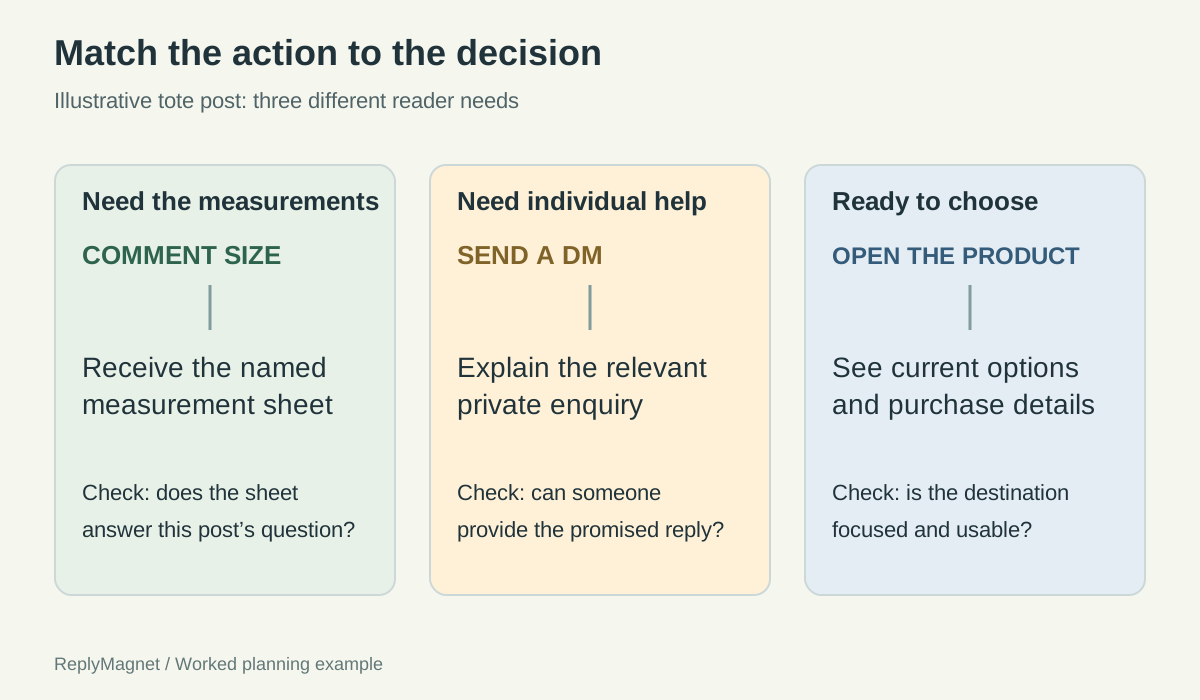
Original decision diagram for the invented tote example. No route is ranked by measured performance.
Remove ambiguity from the last sentence
Name the action, the object and the expected result. A person should be able to explain what happens next without knowing your campaign setup.
“Want more?” does not specify what more means. “Comment SIZE for the tote measurement sheet” does. The difference matters when a reader sees only the caption's final sentence or returns to the post later.
The W3C guidance on writing for accessibility recommends meaningful link text and clear instructions. Applied here, that means describing the destination and avoiding instructions that rely entirely on colour, position or an unexplained icon. It is a useful writing principle, not a claim that a caption alone establishes accessibility compliance.
Check the three parts individually. The action might be comment, message or open. The object might be a named keyword or page. The expected result might be receiving a checklist, asking a question or viewing current stock. Missing any part creates room for a different expectation.
Then check the words against the destination. “Get the free guide” and “join the mailing list to receive the guide” describe different offers. If the reader must take an additional step, decide whether it is necessary and make the arrangement clear. The resource delivery guide covers maintaining that promise after the request.
Place the instruction after enough context to make the offer understandable. A useful instruction at the beginning can also orient a long demonstration, but do not make readers decode an unexplained keyword before they know why they would want the item.
Keep one main action and a purposeful alternative
Use a primary action for the post’s central task. Add an alternative only when it serves a materially different need and does not compete with the main instruction.
A caption that says “comment, DM, visit the website, follow us and tag a friend” distributes attention across several jobs. It becomes difficult to tell whether the reader understood the main offer or simply selected the easiest visible action.
For the tote sizing post, the main action could remain the resource request. A short alternative might say that existing-order questions belong in the support channel listed on the profile. That is a separate need with a clear owner. It does not require a second sales pitch.
An alternative is particularly useful when the main route excludes someone. A person who does not want to discuss a question publicly may prefer the stated private contact method. A person ready to buy may need a visible product destination on the profile, even if the educational post mainly offers the measurement sheet.
The alternative need not be another sentence in every caption. It can be a well-maintained profile destination or the next page's navigation. Review the whole experience before making the post carry every possible instruction.
Keep a record of why you chose the route: “This post answers capacity questions, so it offers the measurement sheet.” That note makes later reviews more useful than judging the caption only by comment volume.
Check comprehension before comparing performance
Ask a willing reader what they expect after taking the action, then test the actual destination. A clear instruction can still lead to a broken or misleading journey.
Show the draft post to someone unfamiliar with the campaign. Ask, “What would you do next if you wanted the measurements?” Then ask, “What do you expect to receive?” Do not supply the keyword or explain the intended route first.
If they expect an immediate product recommendation but the link contains a static chart, fix the promise. If they can explain the offer but cannot find the destination, fix the route. Those are different problems and should not produce the same revision.
For the implementation check, follow the real action on a phone. Open the resource, inspect any form, and confirm the next page is usable without being signed into the owner's account. Where a DM campaign is involved, a public reply alone does not establish successful resource delivery.
After publication, record what the post was meant to help people do. Resource requests, private enquiries and purchases should not be collapsed into a single success count. More of one does not automatically mean improvement in another.
Start with a single post whose next step you can explain in one sentence. Choose the route, finish the destination, and only then configure delivery. That sequence gives the call to action something concrete to promise.