Guides
Use an Instagram waitlist to learn what interest means
A waitlist can tell you who asked for updates about a possible offer. It cannot, by itself, tell you how many people will buy. Make the promise precise, then collect the evidence needed for the decision you are trying to make.
Published by ReplyMagnet · Last updated
Define what exists before inviting people to join
Say whether the offer is available, being developed or only being considered. Explain what joining provides and what it does not reserve or guarantee.

Generated editorial illustration of an idea developing over time. It does not depict measured waitlist demand.
A creator is considering a practical course about organizing family photographs. They have an outline but have not selected dates, finished the lessons or set a price. An Instagram post can invite people to hear more, but it should not sound like enrollment for an available course.
This is a fictional planning example. It contains no observed signups, demand estimates or sales results. Its purpose is to show how a waitlist can support a product decision without turning curiosity into a stronger claim than it deserves.
A clear invitation might say: “I’m exploring a course about organizing family photos. Join the update list if you would like to hear when the outline and launch decision are ready. Joining is free and does not reserve a place or commit you to buying.” Use only promises you can fulfill.
If you already know the intended format but not the date, state that distinction. If the format may change, say so. Specific uncertainty is more useful than a polished announcement that leaves people to assume the offer is finished.
A waitlist, a preorder and a confirmed booking are different arrangements. Do not borrow the language of one to promote another. If you want a stronger commitment, design and explain that separate process properly rather than treating a request for updates as payment intent.
Choose the decision the list will inform
Write a learning question before collecting signups. Decide what other evidence you will need so the list does not become a number you interpret after the fact.
The fictional creator might need to decide which problem the course should address first: sorting a large collection, choosing what to preserve or building a repeatable routine. Counting signups alone will not resolve that choice.
A useful learning question is: “Which part of organizing photos prevents interested people from starting?” It directs the creator toward a question they can ask and a lesson they can design. “Will this be successful?” is too broad for a waitlist to answer.
GOV.UK’s research planning guidance recommends identifying what you need to learn and selecting research accordingly. In this context, the list is one source of evidence, alongside conversations, existing enquiries and examination of the proposed task.
Decide in advance what would change your plan. Repeated descriptions of a difficult first step might justify a smaller introductory resource. People asking for an advanced feature might reveal an audience different from the one you intended. A list full of existing supporters might say little about reaching new customers.
Avoid setting a universal signup threshold from someone else’s campaign. Audience size, visibility, offer clarity and the commitment requested all affect the meaning of the count. If you set an internal planning threshold, label it as your own decision rule and explain its assumptions.
You also need a stopping point. Decide when you will review the evidence and what update you will send if the offer does not proceed. An indefinite list with no owner can leave people waiting for a promise the business has forgotten.
Write a waitlist promise that survives being quoted
Put the offer status, update promise and commitment boundary in one short statement. Check the post, form and first update against that same statement.
A promise worksheet helps expose missing decisions before publication. Complete it in plain language, then remove any claim that the team cannot support. The fictional example below uses a possible course, but the same questions apply to a proposed workshop or product.
Do not hide the uncertainty only on the form. People may see the Instagram caption, receive a link from a friend or read a cropped image. Each entry point should avoid implying a finished offer when that is not the case.
If joining requires an email signup, describe the updates the person is requesting and verify the destination provider’s subscription process. Requesting a DM link is not automatically permission for unrelated email marketing. Keep the invitation tied to the actual choice the person makes.
Do not add scarcity language unless it describes a real constraint. “First to know” is a communication promise; “first in line” can imply priority access. Use the former only if you will send the update as promised, and the latter only if there is a defined priority arrangement.
Fictional photo-course waitlist promise worksheet.
Decision
Current status
- Example wording
- A course is being explored
- Check before publication
- An outline is not a finished course
Decision
Audience
- Example wording
- People trying to organize personal photo collections
- Check before publication
- Avoid implying professional archival advice
Decision
What joining provides
- Example wording
- Updates about the outline and launch decision
- Check before publication
- Assign a person to send the update
Decision
What remains unknown
- Example wording
- Final format, date and price
- Check before publication
- Do not fill gaps with invented specifics
Decision
Commitment
- Example wording
- No purchase or reserved place
- Check before publication
- Ensure the actual process matches
Decision
Review point
- Example wording
- A named internal review date
- Check before publication
- Decide what happens if plans stop
Ask one question that does not supply its own answer
Use neutral wording about the person’s situation. Avoid questions that invite agreement with your idea or assume the problem exists in the way you described it.
“Would you love a simple course that finally organizes all your photos?” asks people to respond to an attractive promise. It does not tell the creator much about the work people need to do.
A more useful question is: “What is the hardest part of organizing your photos at the moment?” Someone might say they cannot choose what to keep, cannot find files or have not made time to start. Another person might say they have no current difficulty and are simply curious. Keep that response as evidence too.
If you offer choices, include a way to express a different situation. A forced choice between three problems can make the data look cleaner while hiding the answer you needed. Do not interpret selecting the nearest option as a precise statement of need.
Ask about recent behavior when it helps: “What did you try the last time you worked on this?” That can reveal constraints more concretely than a hypothetical purchase question. Avoid collecting personal material, such as private photographs, when a description of the task is enough.
Participation in research should be optional and understandable. Someone can want launch updates without wanting to answer several questions. Keep those choices separate in the experience and in your interpretation of the results.
The digital product seller guide covers resource and offer contexts. The waitlist exercise here is earlier in the process: it helps clarify the proposed offer rather than assuming the product and its buying journey are already settled.
Read the evidence at the strength it actually has
A signup indicates a request to hear more under the stated promise. Add qualitative context and observed commitments separately instead of converting the total into predicted sales.
Use an evidence matrix to keep different observations from collapsing into one optimistic conclusion. The fictional entries below describe possible evidence types, not findings from a real campaign.
A person who joins after a vague teaser may have a different expectation from someone who reads a detailed outline and then joins. Record the version of the invitation so you know what people responded to. If the promise changes materially, avoid treating the whole list as a single uniform group.
Look for contradictory evidence. People may describe an urgent problem while preferring a format you cannot deliver. They may like the idea but lack time for the proposed course. Those details can justify changing or declining the idea, which is a useful outcome of research.
Do not treat silence as a definite rejection. A person may miss an update or be busy. Equally, do not count every silent subscriber as an eventual buyer. The absence of a response leaves uncertainty.
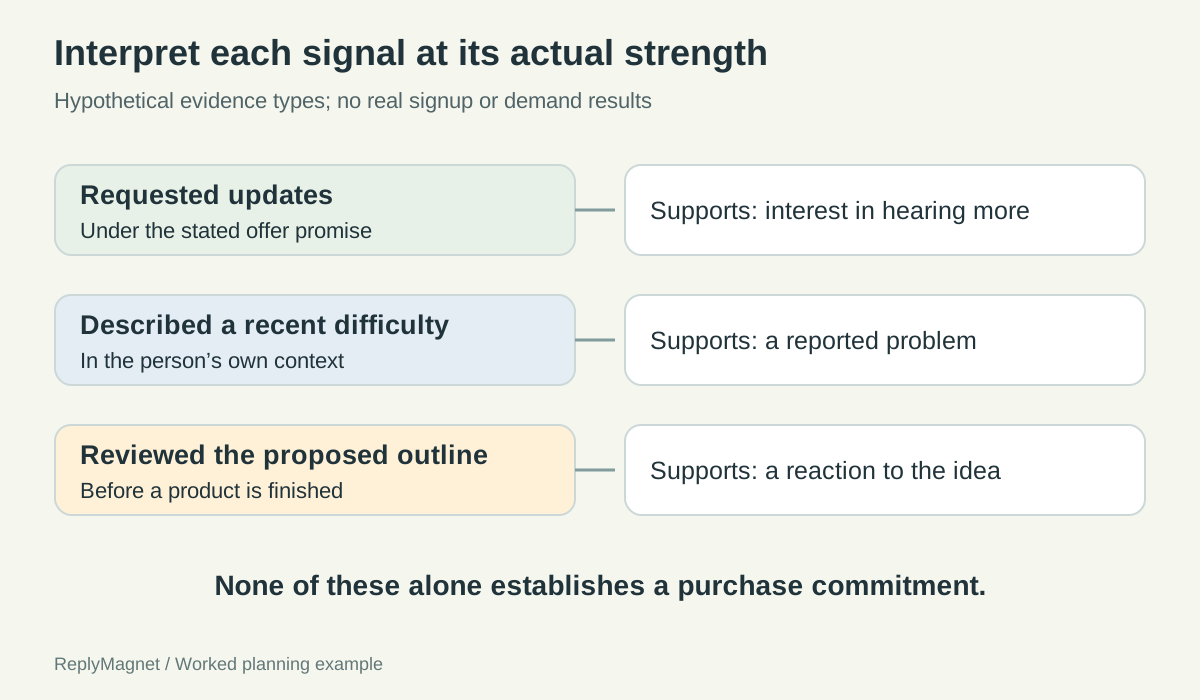
Original waitlist evidence diagram. The signals are illustrative categories, not observed demand or forecasts.
Interpretation matrix for hypothetical waitlist evidence; no actual results are reported.
Evidence type
Requested updates
- What it supports
- Interest in hearing more about the stated idea
- What it does not establish
- Purchase intent or future attendance
Evidence type
Described a recent difficulty
- What it supports
- A reported problem in that person’s context
- What it does not establish
- How common the problem is in the market
Evidence type
Reviewed an outline and commented
- What it supports
- Reaction to the described content
- What it does not establish
- Satisfaction with a finished product
Evidence type
Selected a preferred format
- What it supports
- A stated preference at that time
- What it does not establish
- Willingness to pay or available time
Evidence type
Completed a separately defined purchase
- What it supports
- A recorded commercial commitment
- What it does not establish
- The behavior of everyone else on the list
Close the loop whether you launch or stop
Tell people what the review produced and what happens next. If the offer changes, explain the change before asking for a stronger commitment.
At the review point, prepare an update that matches the original promise. If the course proceeds, explain the confirmed format, date and next step through the appropriate channel. Do not imply that joining the waitlist already enrolled the person.
If you change direction, name the change. “The planned course is becoming a short workshop” is clearer than quietly replacing the destination and assuming the old interest applies. Give people enough information to decide whether they still want the new offer.
If the project stops, say that too. A concise explanation and an honest statement that there is no launch date is preferable to repeated “coming soon” messages. Handle the list according to the purpose and preferences under which people joined and your organization’s applicable process.
Keep an internal decision note: evidence reviewed, uncertainty remaining, decision taken and next owner. That prevents a future team member from interpreting an old signup count as current demand for a different offer.
For the Instagram invitation itself, the comment-to-DM examples can help make the requested action clear. The most useful output of this exercise, however, is the decision about the offer. A waitlist is a way to learn and keep a promise, not a substitute for either.