Compare
A Spur alternative that delivers a file from a comment, starting at $0
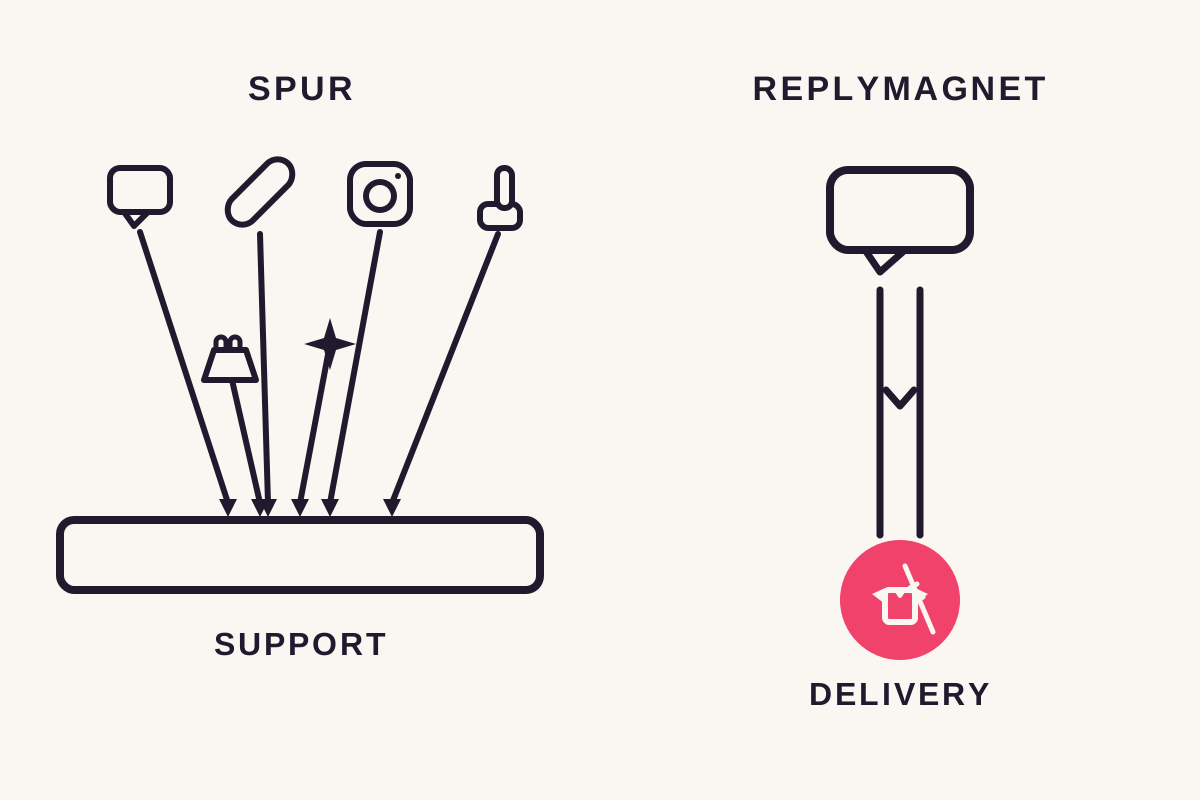
Spur is a commerce chat tool: LiveChat, WhatsApp, Instagram and Facebook in one inbox, with Shopify, Stripe and Razorpay attached. If the job is answering a keyword comment with a size guide and capturing the contact, you are paying a store bot to do a delivery task. ReplyMagnet does the delivery task from $0.
Published by ReplyMagnet · Last updated
The short answer
Spur has no free plan, starts at $12 a month, meters its AI by credits per tier and does not document what happens when the credits run out. ReplyMagnet runs comment-to-DM free with email capture and AI matching included, charges a flat $9 for 25,000 engagements or $29 for 100,000, and queues overflow on every plan.
Start freeAt a glance
Spur starts at $12 a month with no free plan, and ManyChat caps its free plan at 4 automations and 25 contacts. ReplyMagnet includes comment-to-DM, email capture, AI matching and a verified follow check on its $0 plan.
Three tools, the rows that decide most comparisons. Real monthly prices throughout; Spur's annual commitment takes 20% off the figures shown here.
Spur, ManyChat and ReplyMagnet at a glance
Comment auto-reply from
- Spur
- $12 a month, after a 7-day trial
- ManyChat
- $0, capped at 4 automations
- ReplyMagnet
- $0, one live campaign
Billed per
- Spur
- Flat fee plus AI credits per tier, 100 at $12
- ManyChat
- Active contact, overage billed automatically
- ReplyMagnet
- Engagement actually sent
Over the monthly limit
- Spur
- Not found in published docs
- ManyChat
- No queue; $0.10 per extra contact, $0.05 from $39
- ReplyMagnet
- Queues on every plan, including free
Follow check
- Spur
- Follow-ask in the Comment to DM flow; tier and blocking not documented
- ManyChat
- Asks to follow from $17; not documented as verifying
- ReplyMagnet
- API-verified, and optional
AI matching
- Spur
- Credit allowance per tier, 100 a month at $12
- ManyChat
- From $39 a month
- ReplyMagnet
- Every plan, 100 to 2,000 checks a day
Mailchimp or Kit sync
- Spur
- Not found in published docs
- ManyChat
- From $39 a month
- ReplyMagnet
- From $9 a month
Zapier, Make, webhooks
- Spur
- Webhook triggers from $127; Zapier and Make not found
- ManyChat
- From $39 a month
- ReplyMagnet
- From $29 a month
Instagram accounts
- Spur
- 1 at $12, up to 3 at $399
- ManyChat
- One per ManyChat account
- ReplyMagnet
- 3 from $29, 10 from $79
Try the resource flow for 30 days with 1,000 engagements. No card required.
Start freeBegin with a size-guide request
ReplyMagnet can answer a keyword comment with a resource link and optional contact capture. That delivery does not look up orders, take payments or resolve a support ticket.
Imagine a clothing reel with the caption ‘Comment SIZE for the measurement guide.’ The useful response is the current guide, easy to open on a phone. A general shopping conversation may be unnecessary.
For that offer, upload the guide, choose SIZE and write a DM that says what the link opens. Keep questions about returns or a delayed parcel in a support process that can see the relevant order.
Our ecommerce page works through the distinction in more detail.
What Spur does well
Spur is a documented Meta Tech Provider and a Shopify partner with 55+ reviews, and it self-reports 475+ D2C brands. Its plans run LiveChat, WhatsApp, Instagram and Facebook together, with an AI agent on OpenAI, Claude, Gemini or Grok and Click-to-DM ad flows from $12 a month.
Spur is built for a store that talks to customers on several channels from one inbox. One note up front: this is Spur the Instagram commerce automation tool, not the US software-testing startup that shares the name.
Its strongest signal is commerce. Shopify, Stripe and Razorpay connect on the lower tiers, the AI agent draws on a credit allowance per tier, and Click-to-DM ad flows pair Instagram automation with paid acquisition. Both partner statuses are documented programme memberships, not marketing claims.
ReplyMagnet is not in the Meta Tech Provider programme. Its Instagram and Facebook integration was reviewed permission by permission through Meta's App Review and approved in August 2026. Those are different kinds of scrutiny, stated here rather than argued over.
Pricing, compared properly
Spur's real monthly prices are $12, $31, $127 and $399, with no free plan and an AI-credit allowance that grows by tier. ReplyMagnet's are $0, $9, $29 and $79, billed per engagement actually sent, with no credit meter and no overage line.
Spur's ladder is $12, $31, $127 and $399 a month. A lower figure on its pricing page is the annual rate: Spur takes 20% off for an annual commitment, so check the billing toggle before comparing. Every tier opens with a seven-day trial rather than a standing free plan.
Each Spur tier also carries an AI-credit allotment: 100, 2,000, 12,000 and 20,000. The published material does not say what happens at zero credits, so the price you pay depends on a limit whose behaviour you would need to confirm.
The only thing ReplyMagnet bills is an engagement, a reply or DM that actually reached someone. AI matching runs on every plan within a daily allowance of 100 to 2,000 checks, and a comment past the monthly allowance queues rather than billing anything extra.
Real monthly prices and what they include
Free
- Spur
- No standing free plan; 7-day trial on every tier
- ReplyMagnet
- 1,000 engagements, 1 live campaign, plus a 30-day trial
From $9
- Spur
- No plan at this price
- ReplyMagnet
- 25,000 engagements, CSV, phone capture, Mailchimp or Kit sync
From $12
- Spur
- 1 account per channel, 100 AI credits, Click-to-DM ads
- ReplyMagnet
- No plan at this price
From $29
- Spur
- No plan at this price
- ReplyMagnet
- 100,000 engagements, 3 accounts, webhooks, AI-written replies
From $31
- Spur
- 2,000 AI credits
- ReplyMagnet
- No plan at this price
From $79
- Spur
- No plan at this price
- ReplyMagnet
- 400,000 engagements, 10 accounts
From $127
- Spur
- 12,000 AI credits, webhook triggers, custom AI actions
- ReplyMagnet
- No plan at this price
From $399
- Spur
- 20,000 AI credits, up to 3 accounts per channel
- ReplyMagnet
- No plan at this price
Past the cap
- Spur
- Not found in published docs
- ReplyMagnet
- Queued, released when headroom opens
An AI credit is not a delivered order answer
Spur lists AI-credit allowances, but the reviewed material doesn't explain what happens when credits reach zero. Confirm that behavior before relying on the agent during a busy period.
Ask Spur to walk through a real support example: a customer supplies an order number, asks about delivery and then changes the question. Find out what uses a credit and when the conversation needs a person.
ReplyMagnet's AI serves a narrower purpose. It can recognise a resource request without an exact keyword, within a daily allowance. It doesn't turn a SIZE campaign into an order-status service.
Overflow works differently too. A comment beyond ReplyMagnet's monthly allowance waits in a queue and releases oldest-first once the next cycle opens or the plan is upgraded, on every plan including free. The honest edge case: if a queued request outlasts Instagram's messaging window it expires instead of arriving late; flat pricing does not mean instant delivery. Overflow behaviour was not found in Spur's published docs.
Feature by feature
The two tools overlap on the comment-to-DM mechanic and separate on where the free plan starts, on AI credits against a daily allowance, on whether the follow check is verified, and on Mailchimp or Kit sync. Every price is the point at which the feature actually works.
Figures pulled from Spur's own published plan pages on 29 August 2026, not a sales call. Where Spur's material does not state something, the table says so rather than reading silence as absence.
Spur against ReplyMagnet, feature by feature
Comment auto-reply from
- Spur
- $12 a month, after a 7-day trial
- ReplyMagnet
- $0, one live campaign
Free plan
- Spur
- None found; every tier opens with a 7-day trial
- ReplyMagnet
- 1,000 engagements, email capture included
Platforms
- Spur
- LiveChat, WhatsApp, Instagram and Facebook
- ReplyMagnet
- Instagram or Facebook
Billed per
- Spur
- Flat plan fee plus AI credits per tier: 100, 2,000, 12,000, 20,000
- ReplyMagnet
- Engagement actually sent
Instagram accounts
- Spur
- 1 at $12, up to 3 at $399
- ReplyMagnet
- 1 free, 3 from $29, 10 from $79
Overflow
- Spur
- Not found in published docs
- ReplyMagnet
- Queues on every plan, including free
Follow check
- Spur
- Follow-ask in the Comment to DM flow; starting tier and whether it blocks delivery not documented
- ReplyMagnet
- API-verified through is_user_follow_business, optional
AI matching
- Spur
- AI Agent credits per tier on OpenAI, Claude, Gemini or Grok; zero-credit behaviour not documented
- ReplyMagnet
- Every plan, 100 to 2,000 checks a day
Email and phone capture
- Spur
- Not found in published docs
- ReplyMagnet
- Email free; phone from $9
Mailchimp or Kit sync
- Spur
- Not found in published docs
- ReplyMagnet
- From $9 a month
Zapier, Make, webhooks
- Spur
- Webhook triggers and custom AI actions from $127; Zapier and Make not found
- ReplyMagnet
- From $29 a month
Commerce connections
- Spur
- Shopify, Stripe and Razorpay on lower tiers
- ReplyMagnet
- None; checkout stays in your store
Annual billing
- Spur
- 20% off on an annual commitment
- ReplyMagnet
- Roughly two months free on paid plans
Partner status
- Spur
- Documented Meta Tech Provider; Shopify partner, 55+ reviews
- ReplyMagnet
- Meta App Review approved, August 2026
When Spur's commerce tools earn their place
If you run a Shopify or D2C store and want catalogue, cart and order conversations on LiveChat, WhatsApp, Instagram and Facebook from one inbox, with Click-to-DM ads feeding them, Spur is the better fit. ReplyMagnet does not attempt to be a store bot.
Spur connects Shopify, Stripe and Razorpay on its lower tiers and runs four channels with an AI agent across them. If those connections and channels are already essential to your process, Spur may be the better fit. Removing them to save on a subscription could simply move the work back to your team.
Choosing it means accepting the shape that comes with the reach: no standing free plan, a $12 entry with 100 AI credits, one account per channel until $399, and no published statement of what happens past a limit.
Switching
Your Instagram account and its comments live on Instagram's own API, not inside Spur, so a ReplyMagnet campaign with the same keyword on the same post starts answering new comments the moment it launches. Order support and payment flows can stay where they are.
Five steps, in this order:
- Save the existing campaign's keyword, response and resource. Connect the Instagram account to ReplyMagnet and start the free plan; no card is needed.
- Recreate the delivery in ReplyMagnet, select the intended post, attach the guide, and turn on email capture if you want the address.
- Test from another account and open the guide on a phone. Submit a test email if capture is part of the offer.
- Disable the old Spur response for that post before enabling the replacement publicly. Leave both running and whichever tool answers first takes the comment, while the second reply reads as a duplicate.
- Launch, then compare completed deliveries and usable lead records before changing the wording. Leave order support and payment flows in place until you have a replacement for those jobs.
If you collect an email, explain the follow-up. Someone requesting measurements should not have to guess whether submitting an address also joins a mailing list.
Whatever sits in Spur today, contacts, orders and conversation history, stays there. Exporting from Spur is outside what we can speak to, since it is not our product. Once the campaign is live, each answered comment becomes a lead row you can see at once and export as a CSV from $9 a month.
Start free with one existing offer. The plan guide explains the 1,000-engagement free allowance and the separate limits during the 30-day trial.
Sources: Spur, checked 29 August 2026, and ReplyMagnet's published plan catalogue. This is ReplyMagnet's comparison, not an independent product test.
Common questions
Is Spur only an Instagram tool?
Spur lists LiveChat, WhatsApp, Instagram and Facebook. The entry plan covers one of each channel, with larger allowances on higher tiers.
Does Spur have a free plan?
No standing free plan was found in the reviewed Spur material; every tier opens with a seven-day trial. ReplyMagnet's free plan carries 1,000 engagements a month, one live campaign and email capture, with a 30-day trial on top.
Does Spur do lead-magnet delivery?
Spur documents a Comment to DM flow with a follow-ask, but a capture page, email gate or Mailchimp or Kit sync were not found in its published material. ReplyMagnet is built for that job: comment to reply to DM to capture page to delivered file.
Is the follow check verified?
On ReplyMagnet, yes: it reads Instagram's own is_user_follow_business field before delivering, and it is optional. Spur's Comment to DM flow can ask a non-follower to follow; its docs do not state the starting tier or whether the ask blocks delivery.
Can ReplyMagnet collect payment in the DM?
Use your store or payment provider for checkout. ReplyMagnet can deliver a resource containing the appropriate destination, but this workflow does not process the payment.