Compare
An Inrō alternative that never climbs a contact ladder
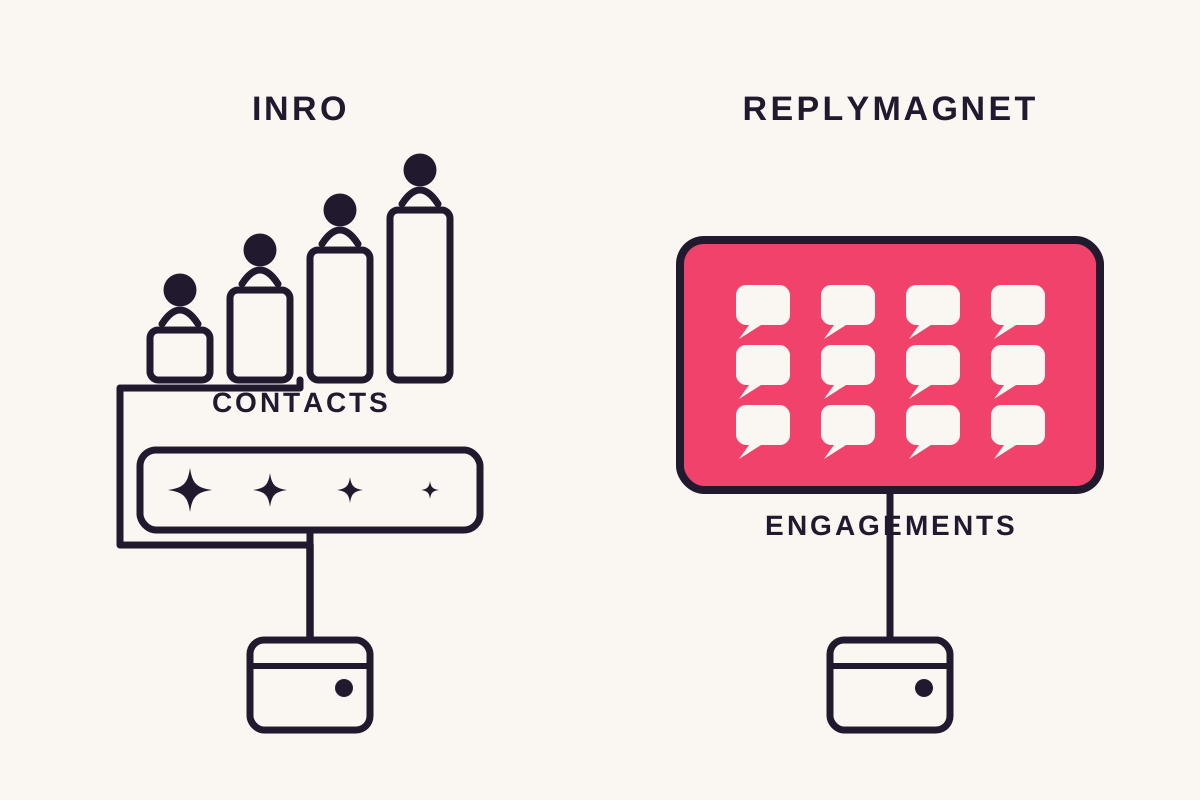
Inrō sets its price by how many contacts a month activates, so a post that does well moves the bill up a band. If your automation's job is sending one resource from an Instagram comment, ReplyMagnet charges a flat monthly price for engagements sent and never moves it with your audience size.
Published by ReplyMagnet · Last updated
The short answer
Inrō's paid price climbs a contact ladder from €12.99 to €149.99 at 10,000 contacts and €999.99 at the top, and its published docs do not say what happens past a band. ReplyMagnet charges a flat $9 for 25,000 engagements or $29 for 100,000, includes AI matching and an API-verified follow check on every plan, and queues overflow on every plan including free.
Start freeAt a glance
Inrō prices Instagram automation by activated contacts on a ladder from €12.99 to €999.99 a month, and its published docs say nothing about overflow. ReplyMagnet bills a flat price per engagement sent, includes AI matching and a verified follow check on the free plan, and queues overflow on every plan.
Three tools, the rows that decide most comparisons. Inrō's prices stay in euros exactly as published; nothing here is an exchange-rate conversion.
Inrō, ManyChat and ReplyMagnet at a glance
Comment auto-reply from
- Inrō
- €0, 3 automations and 3 campaigns a month
- ManyChat
- $0, capped at 4 automations
- ReplyMagnet
- $0, one live campaign
Billed per
- Inrō
- Activated contact, on a ladder from €12.99 to €999.99
- ManyChat
- Active contact, overage billed automatically
- ReplyMagnet
- Engagement actually sent
Over the monthly limit
- Inrō
- Not found in published docs
- ManyChat
- No queue; $0.10 per extra contact, $0.05 from $39
- ReplyMagnet
- Queues on every plan, including free
Follow check
- Inrō
- Follow-to-unlock loop on the blog, not found in the feature table
- ManyChat
- Asks to follow from $17; not documented as verifying
- ReplyMagnet
- API-verified, and optional
AI matching
- Inrō
- AI Agent from €12.99; 50 credits on the free tier
- ManyChat
- From $39 a month
- ReplyMagnet
- Every plan, 100 to 2,000 checks a day
Webhooks and Make
- Inrō
- On the paid tier
- ManyChat
- From $39 a month
- ReplyMagnet
- Outbound webhooks from $29
Instagram accounts
- Inrō
- Not found in published docs
- ManyChat
- One per ManyChat account
- ReplyMagnet
- 3 from $29, 10 from $79
Partner status
- Inrō
- Meta Tech Provider
- ManyChat
- Meta Business Partner
- ReplyMagnet
- Meta App Review approved, August 2026
Try the resource flow for 30 days with 1,000 engagements. No card required.
Start freeWhat Inrō does well
Inrō is a documented Meta Tech Provider, runs Instagram only, and gives a free tier of 100 active contacts with 3 automations, 3 campaigns a month and 50 AI credits. Its triggers cover keywords, emoji, phrases, story replies and mentions, and it sells a done-for-you service from €200 a month.
Inrō carries a documented Meta Tech Provider status and runs Instagram only. The Tech Provider label is a real, checkable status, so we note it as stated rather than disputing it.
The free tier is real: €0 a month for 100 active contacts, 3 automations, 3 campaigns a month, 50 AI credits and 1 seat. Triggers cover keyword, emoji and phrase matches plus story replies and mentions, with email capture inside the DM. Live comment automation, webhooks, Make and A/B testing sit on the paid tier.
Inrō also sells a done-for-you service from €200 a month, where it builds the campaigns for you.
The ladder, written out
Inrō's paid price is set by how many contacts you activate in a month, climbing from €12.99 at the bottom band to €999.99 at the top. Its own calculator lists the 2,001 to 3,000 band twice at two different prices, €49.99 and €59.99, which we report as we found it.
Inrō's paid plan is not a single number. The price steps up with the number of contacts you activate in a billing month, so what you pay depends on how far a given month climbs. The representative bands below come from Inrō's own pricing calculator.
One thing on that calculator is worth reporting exactly as it appears: the 2,001 to 3,000 band shows up twice, at €49.99 and €59.99. We cannot resolve which is correct from the outside, so both are listed. Separately, Inrō publishes an annual price of €1,249 a year, against a €1,800 list, at roughly the 10,000-contact tier.
ReplyMagnet has no ladder to read. Its paid prices are flat and shown up front: $9, $29 or $79 a month, each with a fixed monthly engagement allowance rather than a price that moves with your contact count.
Inrō ladder, representative bands from Inrō's own calculator
Activated contacts a month
Up to 100 (free tier)
- Inrō price
- €0
Activated contacts a month
101 to 500
- Inrō price
- €12.99
Activated contacts a month
501 to 1,000
- Inrō price
- €19.99
Activated contacts a month
1,500 to 2,000
- Inrō price
- €39.99
Activated contacts a month
2,001 to 3,000
- Inrō price
- €49.99 and €59.99 (listed twice)
Activated contacts a month
9,000 to 10,000
- Inrō price
- €149.99
Activated contacts a month
20,000 to 25,000
- Inrō price
- €339.99
Activated contacts a month
70,000 to 100,000
- Inrō price
- €999.99
Pricing, compared properly
Inrō's headline €12.99 is the bottom band only; the same ladder reads €39.99 at 2,000 contacts and €149.99 at 10,000, and its €1,249 figure is a yearly commitment, not a monthly price. ReplyMagnet's real monthly prices are $0, $9, $29 and $79, billed per engagement with no ladder and no overage line.
The number Inrō shows first is the price for a small month, not the price for a good one. A post that reaches more people moves the bill up a band, and the annual €1,249 figure is a yearly commitment at roughly the 10,000-contact tier, not a monthly rate.
ReplyMagnet counts engagements, one per reply or DM actually sent, and nothing else. Five comments from one person and one comment each from five people both count as five engagements. No contact ledger, no overage line, no band to fall into.
Real monthly prices and what they include
Free
- Inrō
- 100 active contacts, 3 automations, 3 campaigns a month, 50 AI credits
- ReplyMagnet
- 1,000 engagements, 1 live campaign, plus a 30-day trial
From $9
- Inrō
- No plan at this price
- ReplyMagnet
- 25,000 engagements, CSV, phone capture, Mailchimp or Kit sync
From €12.99
- Inrō
- 101 to 500 activated contacts; AI Agent starts here
- ReplyMagnet
- No plan at this price
From €19.99
- Inrō
- 501 to 1,000 activated contacts
- ReplyMagnet
- No plan at this price
From $29
- Inrō
- No plan at this price
- ReplyMagnet
- 100,000 engagements, 3 accounts, webhooks, AI-written replies
From €39.99
- Inrō
- 1,500 to 2,000 activated contacts
- ReplyMagnet
- No plan at this price
From $79
- Inrō
- No plan at this price
- ReplyMagnet
- 400,000 engagements, 10 accounts
From €149.99
- Inrō
- 9,000 to 10,000 activated contacts
- ReplyMagnet
- No plan at this price
Past the cap
- Inrō
- Not found in published docs
- ReplyMagnet
- Queued, released when headroom opens
Contacts vs engagements, and what happens past the cap
Inrō bills an activated contact, a person reached in a month, and its published docs do not say what happens past a band. ReplyMagnet bills an engagement, one reply or DM sent, and a comment beyond the allowance queues on every plan instead of failing or billing more.
With that caveat stated, the roughest line-up is this: at Inrō's 20,000 to 25,000 activated-contact band the price is €339.99 a month, while ReplyMagnet charges a flat $29 for 100,000 engagements. Different currencies, different units. What the comparison shows is the shape: one price climbs as more people are reached, the other stays flat.
Past the cap, the tools part again. Inrō's published docs do not say what happens when a month outgrows its band, so ask before relying on it. ReplyMagnet queues the comment, then releases it oldest-first once the next cycle opens or the plan is upgraded. One caveat in plain terms: a queued request that outlives Instagram's messaging window expires rather than delivering late, so a flat bill is not a promise of instant delivery.
Feature by feature
The two tools overlap on the comment-to-DM mechanic and separate on billing unit, overflow, whether the follow check is verified, and where AI and integrations start. Every price below is the point at which the feature actually works.
Figures come from Inrō's own site and pricing calculator, checked 29 August 2026, and from ReplyMagnet's plan catalogue. Where Inrō's material is silent on something, the table says so instead of reading silence as absence.
Inrō against ReplyMagnet, feature by feature
Comment auto-reply from
- Inrō
- €0, 3 automations, 3 campaigns a month
- ReplyMagnet
- $0, one live campaign
Free plan
- Inrō
- 100 active contacts, 50 AI credits, 1 seat
- ReplyMagnet
- 1,000 engagements, email capture included
Platforms
- Inrō
- ReplyMagnet
- Instagram or Facebook
Billed per
- Inrō
- Activated contact per month, on a band-by-band ladder
- ReplyMagnet
- Engagement actually sent
Instagram accounts
- Inrō
- Not found in published docs
- ReplyMagnet
- 1 free, 3 from $29, 10 from $79
Overflow
- Inrō
- Not found in published docs
- ReplyMagnet
- Queues on every plan, including free
Follow check
- Inrō
- Follow-to-unlock loop on the blog, not found in the feature table
- ReplyMagnet
- API-verified through is_user_follow_business, optional
Triggers
- Inrō
- Keyword, emoji and phrase; story replies and mentions
- ReplyMagnet
- Keyword, plus AI intent matching when the keyword is missing
AI matching
- Inrō
- AI Agent from €12.99 a month; 50 credits on the free tier
- ReplyMagnet
- Every plan, 100 to 2,000 checks a day
Email and phone capture
- Inrō
- Email inside the DM; phone not found in published docs
- ReplyMagnet
- Email free; phone from $9
Mailchimp or Kit sync
- Inrō
- Not found in published docs
- ReplyMagnet
- From $9 a month
Webhooks, Make, API
- Inrō
- On the paid tier
- ReplyMagnet
- Outbound webhooks from $29
Partner status
- Inrō
- Meta Tech Provider
- ReplyMagnet
- Meta App Review approved, August 2026
When Inrō is the better fit
If you want someone else to build the campaigns, Inrō's done-for-you service from €200 a month is a fit ReplyMagnet does not offer. The same applies when a conversational AI agent and A/B experiments are already central to your process.
Inrō sells a done-for-you service from €200 a month, where its team handles the setup rather than handing you a campaign builder. ReplyMagnet is self-serve. If you want the result without doing the configuration, Inrō may be the better fit, and that price should be weighed as a service, not as software.
The same goes for a process already built around Inrō's AI agent and A/B testing. Count the work a migration would create before comparing subscription prices. Choosing Inrō means accepting the ladder that comes with it: a price that climbs from €12.99 to €149.99 at 10,000 contacts, and no published answer on what happens past a band.
Switching
Nothing needs exporting: your Instagram account and its comments sit on Instagram's own API, not inside Inrō, so a ReplyMagnet campaign with the same keyword on the same post answers new comments from the moment it launches.
Five steps, in this order:
- Keep the Inrō campaign saved. Connect the Instagram account to ReplyMagnet on the free plan, which needs no card.
- Copy the offer, message and destination into a ReplyMagnet campaign with the same trigger keyword on the same post, and turn on email capture if you want the address.
- Test from another Instagram account: send the exact keyword, then a natural request without it. Both should get the file.
- Turn off the Inrō automation for that keyword or post. Running both at once turns every comment into a race, and the loser looks like a duplicate reply.
- Launch, then judge on completed deliveries and usable lead records before touching the wording or adding steps.
Whatever is inside Inrō today, contacts and any collected emails, stays there; exporting from Inrō is not something this page covers, since it is not our product. From launch onward every answered comment is logged as its own lead, visible in Leads immediately and downloadable as a CSV from $9 a month.
Start free if the delivery flow covers the job; the setup guide covers the controls.
Sources: Inrō's site and pricing calculator, checked 29 August 2026, and ReplyMagnet plans. Published by ReplyMagnet; no independent performance benchmark is claimed.
Common questions
How much does Inrō cost at 10,000 contacts?
€149.99 a month, per Inrō's own pricing calculator, for the 9,000 to 10,000 activated-contact band; its annual price is €1,249 a year at roughly that tier. ReplyMagnet charges a flat $29 for 100,000 engagements, a different unit, so read it as a shape rather than a like-for-like swap.
Is an activated contact the same as an engagement?
No. An activated contact is Inrō's unit, a person your account reached in a billing month. An engagement is ReplyMagnet's unit, one reply or DM actually sent. One contact can involve several engagements, so the two counts do not convert cleanly.
Does Inrō verify follows?
Inrō describes a follow-to-unlock loop on its blog, but we did not find that gate in its feature table, so we note the gap rather than confirm a shipping feature. ReplyMagnet's follow check is in the product, optional, and reads Instagram's own is_user_follow_business field.
Does ReplyMagnet charge per active contact?
No. ReplyMagnet uses engagement allowances, so a matched comment's public reply and DM count together, and repeated matching comments can use additional engagements. There is no per-contact ledger and no overage line.
Will ReplyMagnet replace an Inrō AI agent?
Only for resource requests. ReplyMagnet's AI matching identifies comments asking for a campaign's resource, including ones without the exact keyword. Treat a conversational AI agent as a separate requirement and test it separately.