Guides
Help readers take the first useful step inside your resource
Getting a resource into someone’s hands is only the beginning. The opening page should help them recognize what they can do with it, choose a starting point and complete one useful action without a second explanation from you.
Published by ReplyMagnet · Last updated
Decide what first use would actually look like
Define one observable action that shows the reader has begun using the resource. Opening a file or receiving a link does not establish that action.

Generated editorial illustration of starting with an example. The article’s photo-organizing scenario is fictional.
Imagine a fictional guide to organizing a small collection of printed photographs. A successful first use might be choosing one small group of photos and deciding where to work on it. That is narrower than finishing the entire collection and more meaningful than scrolling past the cover.
This example is instructional. It does not report a customer project, a usability study or a measured improvement. It helps distinguish delivery from the work the resource is supposed to support.
Write the first-use action as something you could observe in an agreed test: “The reader identifies one group to start with and describes the next action.” Avoid defining it as an internal feeling such as being inspired. Feelings can be useful feedback, but they do not tell you whether the instructions made the task possible.
Do not make the first step depend on the whole resource being read. A person who requested a practical guide may want to begin with a small task and consult the rest as needed. Give them enough context to act responsibly, then make the deeper material easy to find.
The lead magnet delivery guide covers access. This guide starts at the next boundary: the reader has the file or page, and the content must now help them do something.
Replace the introductory wall with a useful entrance
Keep essential context, but place the first task where the reader can find it immediately. Explain what they need, what to do and what a reasonable stopping point looks like.
A common opening page begins with the creator’s story, a long explanation of the problem and a list of every chapter. None of those elements is automatically wrong. The issue is whether they delay the task the resource promised.
For the fictional photo guide, an opening such as “Transform the way you preserve memories” gives the reader little to do. A practical entrance could say: “Start with one small group of photos you can handle comfortably. Choose a clear surface and leave the rest of the collection for later.”
The instruction should also define its limits. This example concerns ordinary organizing, not conservation of fragile or damaged materials. A real resource should route specialist questions to suitable expertise rather than improvising preservation advice.
Name any necessary input before the task. If the reader needs a document, a measurement or another person’s answer, tell them. An unexpected dependency halfway through the exercise can make the resource feel unfinished even when the later chapters are excellent.
W3C’s writing guidance recommends clear instructions and meaningful headings. “Choose your first group” is a more useful heading here than “Your journey begins.” The heading should help a reader who returns later locate the task without rereading the introduction.
Keep your background available where it contributes trust or context. It does not need to occupy the first useful minute of every practical resource.
A first-page rewrite for the fictional photo guide
The revised opening should supply a small task, an example and a route to help. It should not add a hidden signup or purchase condition to something already requested.
Before: “Welcome to our complete guide. We believe everyone deserves an organized collection. Read all the chapters to understand our approach, then use the ideas that resonate with you.”
This paragraph establishes a general intention but leaves the reader to choose the task, scope and first action. It also makes complete reading sound like a prerequisite.
After: “Start with one small group. Choose a single envelope, packet or other manageable group of ordinary printed photos. Leave the rest of the collection aside. Your first decision is where to work and which group to begin with, not how to organize everything.”
Next instruction: “Write a short label for the group in your notes, such as ‘holiday envelope.’ Choose a clear working area. If the materials appear damaged or need specialist handling, stop and seek appropriate advice rather than applying this basic organizing exercise.”
Worked example: “I chose one holiday envelope and cleared part of the dining table. I left the remaining boxes where they were. My next action is to inspect what is in this one group before deciding on categories.”
That first-person wording is an explicitly invented example, not a claim that the author performed the task. Label it “Illustrative example” in the actual resource as well.
Stop point: “You have finished this first step when you can name the group and the next action. Continue to the sorting section when you are ready.”
Help route: “If you are unsure where to begin, read the two example starting points on the next page. For a question those examples do not answer, use the stated contact route.”
The revision is useful because the reader knows what to do now. It does not promise that the whole organizing project will be easy or complete in a particular number of minutes.
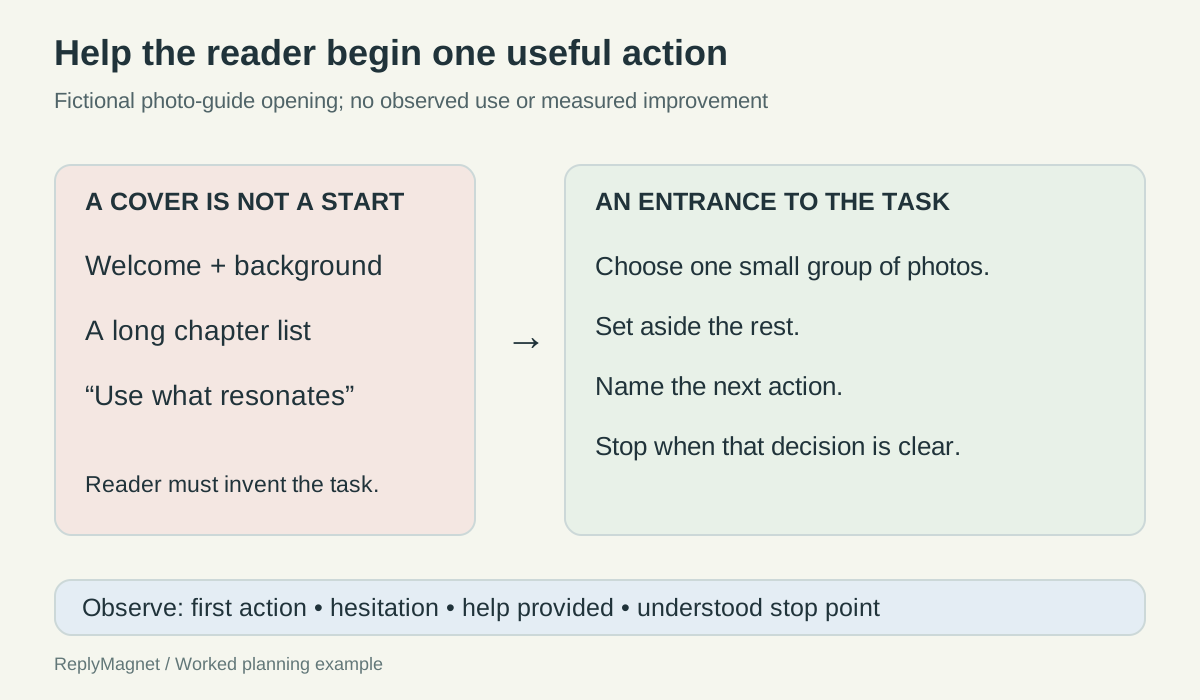
Original first-use orientation diagram. It illustrates a proposed opening, not a tested resource or native behavior tracking.
Offer help without turning the first task into another funnel
Place examples and clarification near the point of uncertainty. Keep optional feedback and commercial next steps separate from access to the promised instruction.
A reader who needs help should not have to guess whether the contact link is for support, sales or a paid consultation. Explain its purpose and set only expectations the team can meet.
Often the smallest useful help is a second example. If the first example begins with an envelope, another could begin with a small album or a digital folder, provided the resource actually supports that context. Avoid expanding into a new topic simply to add variety.
Use a brief “If you cannot do this yet” note for common dependencies. A person may lack a suitable workspace or be unsure which materials belong to them. The note can suggest a preparatory decision without pushing them through the main exercise prematurely.
Do not require a testimonial, social post or email signup to reveal the next instruction unless that condition was clearly part of the original offer and appropriate to the task. For an ordinary freely supplied resource, optional feedback should remain optional.
A helpful feedback question is specific: “Which instruction did you need to reread before starting?” It invites a correction. “Did you love the guide?” may produce encouraging replies without locating a problem.
ReplyMagnet’s delivery features should not be presented as in-file behavior tracking or an automatic support sequence. If you provide a contact link, someone still needs to own the questions it receives. The resource ideas guide can help when feedback reveals that a different resource format would serve the task better.
Observe the first task with a small, honest record
In an agreed usability session, record what the person does, where they hesitate and what help you provide. Keep those observations separate from your interpretation.
Give someone the resource through the same kind of route a reader will use, then ask them to begin the stated task. Do not explain the first page before they read it. Your explanation would become part of the experience being tested.
Watch for the point where intention becomes action. Did the person identify the first step? Did they understand what they needed? Did they start a much larger task than the resource intended? Did they believe a sample sentence was something they were supposed to copy exactly?
GOV.UK’s moderated usability guidance describes observing realistic tasks. An informal session can reveal problems worth correcting, but it is not evidence that everyone will use the resource successfully.
The blank observation sheet below avoids scoring the participant. It records the resource’s behavior in context. If the observer had to intervene, record that intervention rather than counting the completion as unaided.
After the session, choose the smallest content change that addresses the observed obstacle. A missing label may need a label, not an additional chapter. Test the changed opening with someone who has not already learned the task from the earlier version.
Blank first-use observation sheet; no participant results are supplied.
Record
Task and version
- What to write
- The intended first action and resource edition
Record
First action observed
- What to write
- What the person actually did
Record
Point of hesitation
- What to write
- The wording or location they paused at
Record
Help provided
- What to write
- Any explanation, hint or intervention
Record
Understood stop point
- What to write
- What the person believed counted as finishing
Record
Revision hypothesis
- What to write
- A proposed change, kept separate from observation
Report use only where you have evidence of it
Separate access counts, optional self-reports and observed task completion. Each answers a different question and has different limitations.
A delivery record can show that a resource reached a recorded delivery state. It cannot show that the reader completed the first exercise. A page visit can show a visit if measured appropriately, but still does not demonstrate the intended action.
A feedback response can tell you what the person reports doing. That is useful evidence with its own limits: people who respond may differ from those who do not, and recollection is not direct observation. Keep those limitations visible when summarizing what you learned.
In a usability session, you may observe a task being completed under the session’s conditions. Do not generalize that into a claim about every download or future reader. Describe the task, version and assistance involved.
For a small resource, a few specific observations may be more actionable than a large count of downloads. Repeated confusion about the first instruction points to a concrete revision. A high access count with no evidence of use leaves the use question unanswered.
The Instagram lead measurement guide separates broader acquisition outcomes. For the resource itself, choose a modest completion test: can a reader recognize, begin and finish the first useful action the page promises? That is enough to guide the next revision without inventing an engagement metric.