Guides
Answer “How much?” with information a buyer can use
A price question is a request for useful information. Answer the part you can answer, explain what makes the price vary and ask only for the missing detail that changes the next decision.
Published by ReplyMagnet · Last updated
What kind of price do you actually have?
Choose between a published fixed price, a defensible range and a bespoke quote. Your reply should reflect the offer’s real pricing structure, not a preferred sales script.

The person asking “How much?” may be deciding whether to spend another minute investigating. Making them complete a long questionnaire before learning anything about cost can create unnecessary work for both sides.
Start with the information your business has already approved. A fixed package can have a direct answer with its inclusions and relevant conditions. Variable work may have a useful range if that range accurately describes a defined scope. Bespoke work may genuinely need a quote, but you can still explain what determines it.
Do not call an entry price a typical price unless your records support that description. Do not offer a range so wide that it leaves the reader no better informed. A range is useful when it helps someone distinguish an ordinary request from a substantially different project.
This article uses a fictional design studio to illustrate the decisions. It supplies no market rates and makes no claim about what design services should cost. Replace the example scope with your actual offer and approved pricing information.
Write down the rule your team will use before drafting replies: “We can state the price when the deliverable, revision scope and delivery arrangement match the package. Otherwise we identify the difference and prepare a quote.” That rule is more dependable than improvising a number in every conversation.
A short decision tree for the first reply
Give the known price information first. Then decide whether the request matches a published package, needs one scope clarification or must move to a formal quote.
Use this sequence when an enquiry arrives:
- Identify the offer the person is asking about. If the post names a particular package, do not ask them to repeat it.
- Check whether that offer has a current approved price and scope. If it does, answer directly and link to the complete details.
- If the request differs, identify the one difference most likely to affect the price. Ask about that difference in plain language.
- If several material decisions remain unresolved, explain the quote process and what information it needs.
- Keep the final quote in the business’s approved quoting system or document, with the actual scope and terms.
This sequence is an editorial recommendation, not an automated estimator. ReplyMagnet should not be described as calculating bespoke prices or issuing binding quotes. A DM can help someone reach the right information; the business remains responsible for the offer it makes.
Sometimes the first question is simply “Which package do you mean?” That is reasonable when context is genuinely absent. It is less helpful when the person has replied to a post with a single named package. Use the available context to avoid making the buyer do your reading for you.
The W3C clear-writing guidance supports simple instructions and meaningful links. Apply that here by naming the missing detail: “How many pages need designing?” is easier to answer than “Tell us your requirements.”
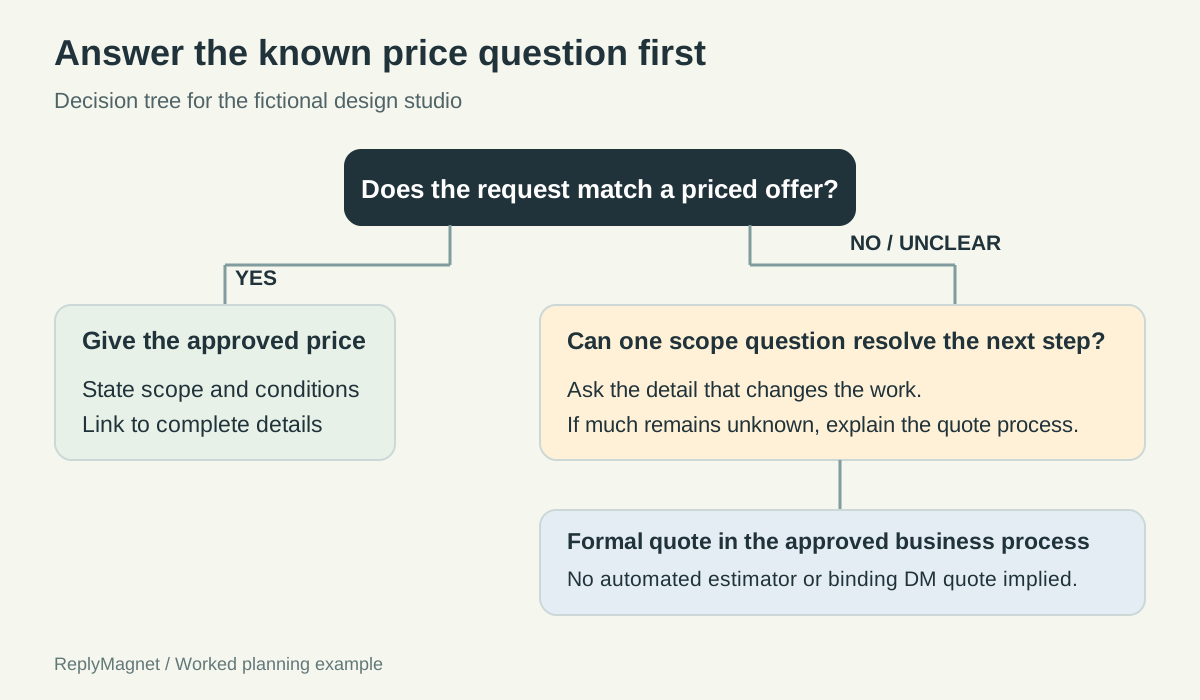
Original price-response decision tree. It supplies no market rates and does not represent an automated estimator or binding quotation feature.
Three fictional enquiries, three different replies
A fixed package needs a direct price answer; a scope change needs an explanation; an undefined project needs a small, purposeful next step.
These exchanges are invented examples. Bracketed price references mean “insert the current approved information,” not a suggested amount. They are written to show the logic of a response, not to be copied without checking your offer.
Enquiry one: the standard package. A person replies to a post for a one-page event flyer: “How much is this?”
Possible response: “The one-page flyer package is [published price]. It includes [actual inclusions] and [actual revision allowance]. You can see the full package and booking details here: [package link].”
No qualification question is needed if the named offer already answers the request. If a material condition affects the price, place it beside the price rather than leaving it hidden at the destination.
Enquiry two: a larger version. “How much for something like that, but a six-page brochure?”
Possible response: “The flyer price covers one page, so a six-page brochure needs a separate quote. The main difference is the number of designed pages. Will you supply the final text and images, or do you need help preparing those too?”
The question has a reason: content preparation changes the work. The response does not pretend the standard package includes a brochure, and it does not ask about unrelated business goals before clarifying the scope.
Enquiry three: an undefined project. “Can you do all the design for our launch? How much?”
Possible response: “We can assess a launch design project after listing the items you need. Could you start with the main deliverable, such as a presentation, printed materials or a set of digital graphics? We will then explain the information needed for a written quote.”
That response gives the buyer an easy starting point. It does not promise availability or a final price. If the studio cannot take the work, the truthful first reply should say that instead of sending the person through a qualification exercise.
Each reply also leaves space for a human to notice a mismatch. A customer may need a service the studio does not provide. Learning that early can be a successful conversation even when it produces no sale.
Ask the question that changes the quote
Choose a missing detail because it affects scope, suitability or the next action. Explain why you need it when the reason is not obvious.
A design studio might need to know whether the customer supplies final copy. A coach may need to know which service the person is considering. A workshop organizer might need to distinguish an individual place from a private group enquiry. These are different decisions, so one generic qualification form will not fit them equally well.
Try a deletion test on every question: if the answer would not change your response, quote preparation or routing, remove it from the first exchange. You can collect administrative details later when there is a reason to do so.
Avoid asking for a budget merely because a script says to ask. A budget may be relevant when choosing between genuinely different scopes, but it should not replace available price information. If you use it, explain the choice it will inform: “We can compare a smaller set of deliverables with the full launch package.”
Give answer options only when they match real paths. “Final copy ready” and “Need copy preparation” may help the fictional studio. “Small, medium or large project” leaves the buyer guessing what your labels mean.
For a person who cannot answer yet, provide a useful fallback. They might review a sample scope or send an existing brief through an approved channel. Do not interpret uncertainty as poor intent. Some people need information before they can define the project.
The guide for coaches and consultants describes service-resource contexts. Keep this price conversation focused on resolving the immediate commercial uncertainty rather than recreating an entire intake process in DMs.
Prepare a quote without losing the original request
Carry forward the known scope, unresolved choices and source of the enquiry. The person preparing the quote should not need to restart the conversation.
Use a compact quote-preparation note after the initial exchange. It is an internal handover aid, not a promise that every item has been agreed. Mark each point as confirmed, proposed or unresolved.
For the six-page brochure example, the note might say: “Six-page brochure requested; content preparation not yet confirmed; customer referenced the one-page flyer post; standard flyer package does not apply.” This records the important difference without inventing a deadline or budget.
If the customer changes the scope later, retain the change rather than silently overwriting the earlier understanding. A final quote should describe the current agreement. The DM history is useful context, but should not leave the customer assembling the final terms from scattered messages.
Before sending the quote, compare it with the original question. Have you answered the cost question? Have you explained what is included and what remains optional? Is there a clear next step for accepting, correcting or declining it? The business’s normal review process should resolve those points.
Quote-preparation checklist for the fictional design studio.
Field
Requested output
- What to record
- Named deliverables and quantities
- If unknown
- Ask which output matters first
Field
Content responsibility
- What to record
- Who supplies text and images
- If unknown
- Clarify before pricing preparation work
Field
Scope boundary
- What to record
- What is included and excluded
- If unknown
- Mark as proposed for review
Field
Timing
- What to record
- Requested date and confirmed availability
- If unknown
- Do not imply a slot is reserved
Field
Price basis
- What to record
- Approved package or bespoke estimate process
- If unknown
- Route to the person authorized to quote
Field
Next action
- What to record
- Who prepares or reviews the quote
- If unknown
- Assign an owner in the existing workflow
Keep the reply current and judge it by understanding
Review price replies when offers change, and inspect whether people understand the scope and next step. A short reply is not automatically a useful reply.
Price information becomes misleading when it remains attached to an old package after the business changes its offer. Give approved snippets an owner and a review trigger. A changed inclusion, revision allowance or booking condition is a reason to review the wording, not just a change to the headline price.
If you share a maintained price page, test the destination from the same device context your audience uses. Confirm the page names the offer, displays the relevant conditions and gives a clear route for a different scope. The comment-to-DM guide covers delivering a requested link; it does not replace the work of making that destination accurate.
Review a small set of real, authorized enquiries for misunderstandings. Did people think an entry price covered a larger job? Did they repeat a question the reply supposedly answered? Did staff ask for information already present in the message? Record those specific problems and revise the wording that caused them.
Do not treat every conversation that ends after a price answer as a failure. The person may have learned that the offer is outside their needs or budget. A clear answer can prevent an unsuitable project from consuming time on both sides.
Your response is ready when a reader can tell what is known, what changes the price and what happens next. That is a stronger standard than how convincingly the message pushes them toward a call.