Guides
Connect an Instagram event enquiry to confirmed registration
Someone asking for event details has expressed interest. They have not necessarily registered, paid or secured a place. Design the journey so each step says what has happened and what the person still needs to do.
Published by ReplyMagnet · Last updated
The word “registered” needs a real event behind it
Treat an information request, a registration attempt and a confirmed place as separate states. Only the event’s registration system or authorized organizer can establish confirmation.

Generated editorial illustration of a workshop arrival. It is not a real event or a registration-system screenshot.
A post says “Comment for workshop details.” A reader comments, receives a link and assumes their place is held. The organizer counts the comment as interest, while the attendee believes they have a booking. The problem began with an unclear transition, not necessarily with a broken link.
Name the transition in the reply: “Here are the workshop details. To request a place, complete registration on the event page. Your place is confirmed only when the organizer sends the stated confirmation.” Adapt that wording to the actual process. Some events confirm immediately; others require review or payment. Do not invent a universal sequence.
This article uses a fictional neighborhood illustration workshop. It makes no claim about a real event, venue or booking system. Its purpose is to show how facts and states should connect.
ReplyMagnet can deliver a requested resource link. That does not make it an event ticketing system, a capacity checker or a reservation service. Keep those functions with the verified external registration process and its owner.
Before writing promotional content, ask the organizer to describe how a person becomes confirmed. If the team cannot answer that in one clear sentence, resolve the process before sending more people into it.
Create one facts sheet that every message can rely on
Record the event’s verified details, registration destination and confirmation rule in one working sheet. Use it to check posts, replies and the external page.
The facts sheet is an internal reference, not another public page to maintain independently. Its value is that it makes discrepancies visible before the event is promoted.
For the fictional workshop, do not begin with attractive copy. Begin with the full event name, date, local time and time zone, location or online joining arrangement, intended audience and registration route. Use exact information once confirmed. Avoid “this Saturday” as the only date in material people may find later.
Record what is included, what the attendee must arrange and where the applicable booking terms appear. If a requirement determines whether someone can attend, make it visible before registration. The FAQ can explain details, but should not be the only place a material condition appears.
The sheet also needs a change owner. If the venue changes, someone must update more than the main page. Posts, scheduled content, reply copy and confirmation messages may all contain the old location.
W3C’s writing guidance recommends clear instructions and meaningful link text. Applied here, a link called “Read workshop details and register” sets a more useful expectation than an unexplained “Get access.”
Working facts sheet for a fictional event. Fill it with verified details before promotion.
Field
Date and time
- What must be explicit
- Calendar date, start/end and relevant time zone
- Owner to consult
- Event organizer
Field
Place
- What must be explicit
- Verified address or online joining arrangement
- Owner to consult
- Venue or delivery owner
Field
Audience and requirements
- What must be explicit
- Who the session suits and any participation requirements
- Owner to consult
- Facilitator
Field
Registration
- What must be explicit
- Current destination and required steps
- Owner to consult
- Registration owner
Field
Confirmation
- What must be explicit
- What message or record confirms a place
- Owner to consult
- Registration owner
Field
Changes and questions
- What must be explicit
- Maintained contact route and update process
- Owner to consult
- Named event contact
Write the journey as a sequence of states
At each step, tell the attendee what is true now and what action moves them forward. Do not let a friendly acknowledgement sound like a booking confirmation.
A simple state map might contain five points: interested, reading details, submitting registration, awaiting the required confirmation and confirmed. Your real process may omit or add a state. The important feature is that each has a distinct meaning.
At interested, the person may have commented or sent a question. The reply can provide the information requested. It should not say “You are on the list” unless the intended list and its meaning are explicit.
At reading details, the event page should let the person judge suitability before submitting information. If the event is full or registration has closed, that should be apparent at the destination. A DM link cannot establish the page’s current capacity state.
At submitting registration, the external form or process collects what the organizer needs. The Instagram conversation should not suggest that returning to the DM completes a step unless the real process says so.
At awaiting confirmation, the person needs to know what to look for and where to ask if it does not arrive. The organizer should describe its own expected process accurately without guaranteeing email delivery.
At confirmed, the authoritative record belongs to the registration system or authorized organizer. Attendance is still a separate later event. A confirmed attendee may not arrive, and someone requesting details may never register.
Write the message at each transition before choosing automation mechanics. This makes it easier to catch phrases such as “See you there” that might be harmless in context but misleading when sent to someone who has only requested information.
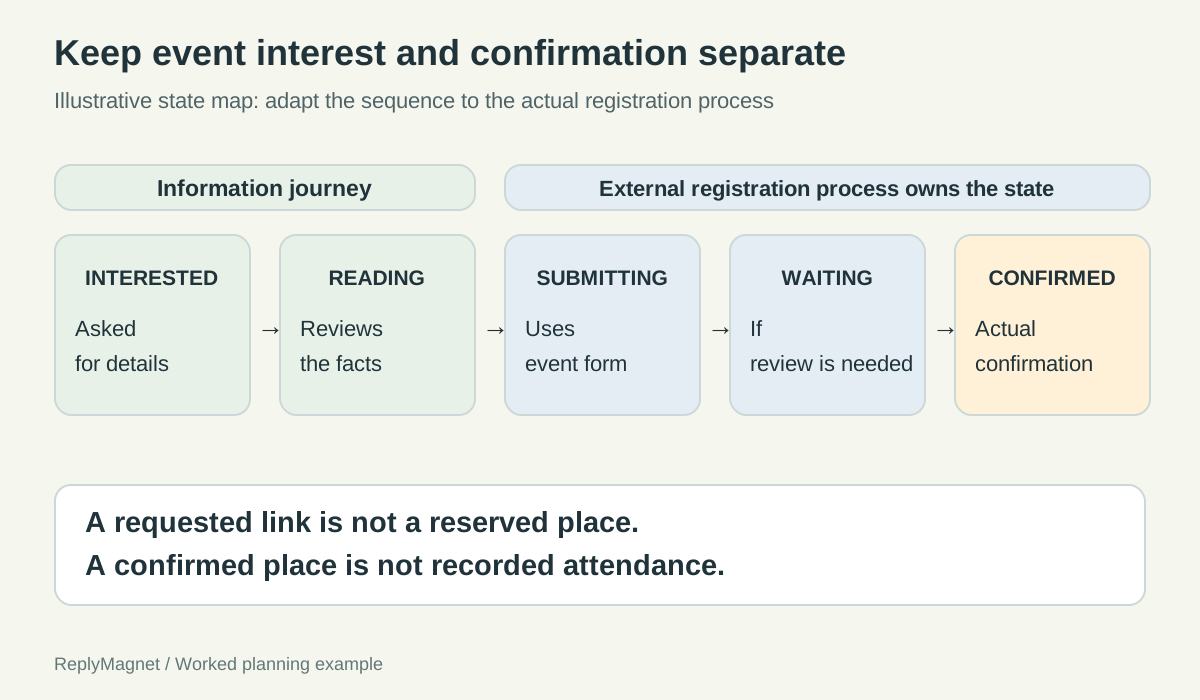
Original event state map. It is not a native ReplyMagnet ticketing flow; the external organizer or system defines confirmation.
A worked copy review for the fictional workshop
Compare the promise in the post with the reply and destination. They should describe the same next step in language that does not overstate commitment.
Draft post: “Want to join our illustration workshop? Comment DRAW and you’re in.”
The phrase “you’re in” is the problem. The comment does not complete the external registration process. A clearer version is: “Thinking about the illustration workshop? Comment DRAW for the event details and registration link.”
Draft reply: “Your spot is ready. Here’s the link.”
That wording repeats the reservation implication. A more accurate reply is: “Here are the workshop details and registration page. Review the date and requirements, then follow the registration steps there. Requesting this link does not reserve a place.”
Draft destination heading: “Welcome, attendee!” above an unsubmitted form.
The page has not yet established that status. A suitable heading might be “Register for the illustration workshop,” followed by the actual date, location, requirements and process. After submission, the confirmation state should reflect what the system truly did.
These are invented examples of copy review, not screenshots or tested conversion improvements. Their value is the consistency of meaning across the journey.
For some events, the phrase “request a place” is more accurate than “book a place” because the organizer reviews applications. For others, a checkout confirms the booking. Match the words to the real process rather than adopting whichever phrase sounds easiest.
If the event has several sessions, preserve the chosen session throughout the destination and confirmation. A generic link that makes the attendee choose again may be unavoidable, but the reply should explain it rather than implying the selection has already been saved.
Prepare for the date changing before it changes
Decide who updates the authoritative event information and how confirmed attendees will receive necessary changes. An old promotional post is not a dependable notification system.
A changed date, location or format can affect people differently. Someone who only requested information needs current public details. A confirmed attendee may need a direct update through the registration system’s appropriate communication route. Do not assume one edited caption reaches both groups.
Create a compact change checklist: update the authoritative event page, check active promotional destinations, revise reply copy, review scheduled posts and coordinate attendee communication with the registration owner. Record what changed and when so the team can explain discrepancies.
Use the external system’s verified, appropriately permitted communication process for reminders or changes. This article does not assume native event reminders in ReplyMagnet or permission to send unlimited later Instagram messages.
For a closed event, keep the destination understandable. State that registration has ended and explain any real next option, such as a separate future-interest form. Do not silently send someone to a different event and let them infer it is the same offer.
If a resource asset changes, remember that new deliveries and previously delivered links are different. The asset documentation explains that replacing a resource affects new requests; older delivered links retain their original target. Check the actual destination experience for someone following an earlier message.
This maintenance work is particularly important for posts that continue circulating after the initial promotion. A clear date and current destination reduce the chance that an old piece of content creates a new misunderstanding.
Count the stages your records actually show
Report requests, registration confirmations and attendance separately. Use the system responsible for each event, and do not treat missing records as proof that the person abandoned the process.
A useful review might compare requested links, confirmed registrations in the event system and recorded attendance. Those numbers answer different questions. They may not join perfectly if the tools use different identifiers or people share the public event link.
Do not label every delivered link a registration or every registration an attendee. If you cannot connect a particular request to a confirmed registration, describe the limits of the comparison. A person may use another device or arrive directly at the event page.
Run one controlled journey before launch using the organizer’s approved testing method. Inspect the post wording, actual reply, destination, form outcome and confirmation. Use a test arrangement that does not accidentally consume a real place or create an unhandled booking.
Then test the exceptions that matter: a full event, a closed registration page, an incorrect session and a question the FAQ cannot answer. Record the expected route to help. The comment-to-DM examples can help with promotional wording, while the lead measurement guide separates acquisition stages.
The event journey is ready when a person can tell whether they are learning, applying, waiting or confirmed. Clear states help the organizer as much as the attendee, because the team stops counting one kind of action as another.