Guides
Make a stopped Instagram conversation easier to understand
A conversation that stops after a question leaves an unknown, not an explanation. The person may be busy, unsure what the question means or finished with the task. Before adding a reminder, inspect what the conversation is asking them to do.
Published by ReplyMagnet · Last updated
The short answer
Locate the last supported interaction, identify the purpose of every requested answer and remove questions that do not change the next useful action. Treat silence as unknown and respect messaging eligibility. Preview can check logic, but it cannot establish live delivery or reading.
Start freeA pause does not identify its cause
Separate the last recorded event from assumptions about attention, interest or intent.
A fictional photography educator offers two resources: a beginner camera checklist and a guide to organizing image files. The DM flow asks a person several questions before providing either destination. Some conversations appear to stop partway through, and the educator wonders whether the opening question is too difficult.
That is a reasonable hypothesis, but it is not yet a finding. A person may have left Instagram, received what they needed elsewhere or decided the resource was not relevant. The available record may not establish whether the person read the question at all. Avoid turning an absent response into a confident diagnosis.
Begin with the strongest supported statement: what interaction is actually recorded, in which system, and what comes next in the configured path? Keep sent, delivered, read, answered and externally completed actions distinct. Do not assume the product exposes every one of those states.
A useful internal note might say, “The last available response selected beginner guidance; no later answer is recorded.” It should not say, “The user rejected the offer” unless there is evidence of that decision. This distinction affects what the team should change.
The form-abandonment guide covers a different boundary: an external capture form. This article stays inside the conversation, where each extra turn asks the person to interpret and answer another prompt.

Generated editorial illustration of choosing a shorter route. It does not show actual conversation behavior or measured drop-off.
Try the resource flow for 30 days with 1,000 engagements. No card required.
Start freeAudit each turn by the decision it changes
A question earns its place when the answer is needed for a useful next step.
The educator writes down the original five-question exchange. First: “Are you a beginner?” Second: “What is your main goal?” Third: “Which camera do you own?” Fourth: “What is your email?” Fifth: “Which guide would you like?” The final answer chooses the resource, while the earlier questions may not affect delivery at all.
For each turn, ask what happens differently because of the answer. If the same guide appears regardless of camera model, that question does not currently support routing. It may be interesting to the business, but that is a separate purpose that should be justified rather than hidden in the resource path.
Ask whether the reader can answer comfortably. “Main goal” can be broad, while two named resources are concrete. A person may know they need a file-organizing guide without knowing how to describe their overall photography ambition. The more abstract question can add effort without improving the route.
Inspect sensitive or personal requests especially carefully. Do you need the information for this task? Has the person been told why it is requested? Is the collection method appropriate? Do not add contact capture merely because the conversation has an empty place for another question.
The audit should distinguish necessary routing, optional research and unnecessary repetition. The revised route can preserve the first category, move the second into an explicit separate invitation and remove the third. That is a content-design decision, not a guarantee of higher completion.
Turn-purpose audit for the fictional photography resource exchange. No live drop-off findings are claimed.
Original question
Are you a beginner?
- Does it change the immediate route?
- Not used to select the destination
- Editorial decision in this example
- Remove from required path
Original question
What is your main goal?
- Does it change the immediate route?
- No defined branch depends on it
- Editorial decision in this example
- Remove or ask as separate optional research
Original question
Which camera do you own?
- Does it change the immediate route?
- Both guides remain the same
- Editorial decision in this example
- Remove from required path
Original question
What is your email?
- Does it change the immediate route?
- Not needed for this illustrative direct-resource route
- Editorial decision in this example
- Do not require it for this task
Original question
Which guide would you like?
- Does it change the immediate route?
- Selects checklist or file-organizing guide
- Editorial decision in this example
- Keep as the clear resource choice
Shorten the exchange around the resource choice
Offer a clear choice and deliver the matching next step without requiring unrelated answers.
The revised illustrative opening says: “Which would help you now: the beginner camera checklist or the file-organizing guide?” The options name the actual resources. After the person chooses, the next message explains what the selected guide contains and provides the supported destination.
For the camera checklist, the response might say: “The checklist helps you review the basic controls described in your camera's own manual. Start with the section labeled ‘Find the controls.’” That description must match the real resource before use. It should not imply model-specific advice that the generic checklist cannot provide.
For the file-organizing guide, the response can name a different first task. The two branches should differ because the resources do different work, not because the business wants a longer conversation. If the resource itself is enough, an End step can provide a clean stopping point in a verified flow design.
This revision removes questions about broad goals, camera ownership and email from the illustrative route because none changes the immediate resource choice. A different campaign may genuinely need additional information. The point is to justify each turn against the reader's task rather than adopt a universal two-message formula.
ReplyMagnet's current chat-flow guide describes supported Choice, Message and other nodes. Use the actual supported configuration and plan eligibility. This example does not claim a native CRM qualification score, a read receipt or an automatic reminder feature.
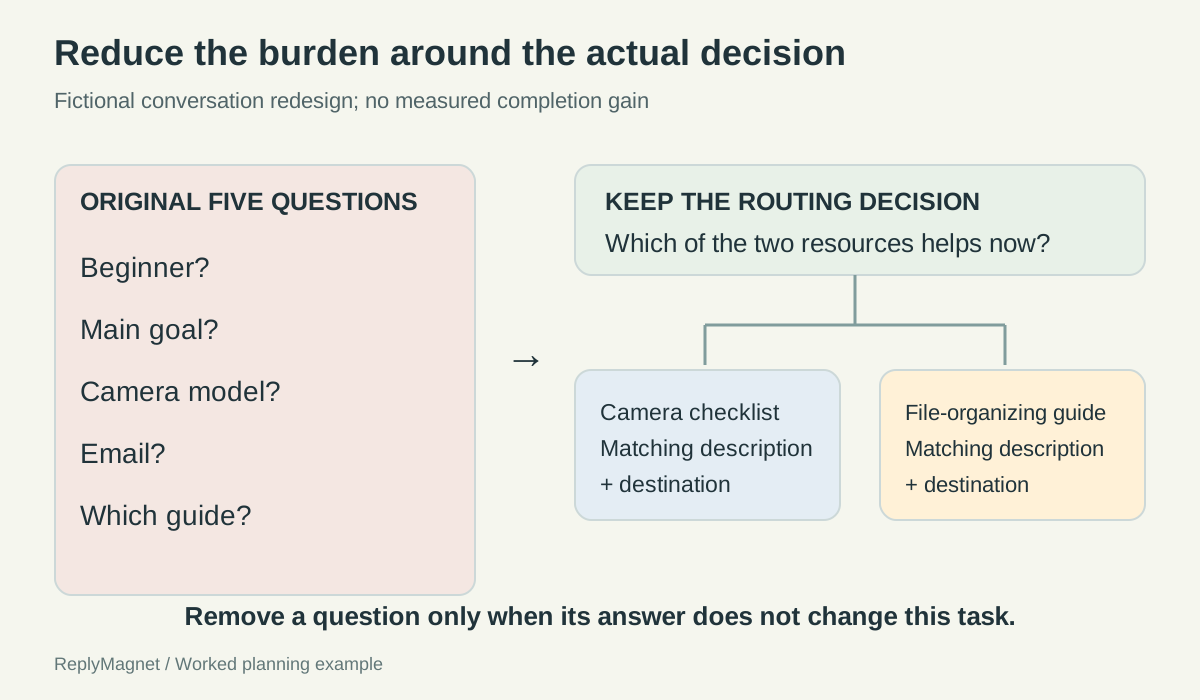
Original before-and-after route diagram. It is not a universal message-count rule, reminder sequence or observed result.
Make uncertainty and stopping points visible
A person should understand what happens next and be able to finish without being forced into an unrelated commitment.
A vague question can make the next step feel larger than it is. “Tell us about yourself” leaves the reader to decide how much detail is expected and what it will be used for. “Choose the guide you want” describes a bounded action with an understandable result.
State why a necessary question is being asked. If the answer selects one of two genuinely different resources, explain that relationship. If it is optional feedback, identify it as optional and do not make the promised resource depend on an unrelated response.
Provide a clean conclusion after the useful action. The person may be done. A resource delivery should not automatically become a demand to book a call, share an email and answer several research questions. Each further invitation needs its own relevance and appropriate eligibility.
W3C's writing guidance supports clear instructions and meaningful labels. In a DM, concise language matters because the person must interpret the prompt before they can decide whether to continue. Brevity alone is not enough if the wording removes the reason for the question.
Do not interpret a stopped conversation as permission to chase the person through other channels. The automation rules guide remains relevant. This article recommends improving the route; it does not propose a drip sequence, a window extension or unsolicited follow-up.
Test the new logic and the reader’s understanding separately
Use Preview for configured paths and an appropriate user task for comprehension, while reserving delivery claims for real evidence.
First, inspect every path in the revised configuration. Check that each choice leads to the correct resource description and that no necessary branch has become disconnected. ReplyMagnet Preview can help examine logic, but it does not send messages, establish live delivery, open external links as a customer journey or prove that someone read the content.
Then ask an appropriate willing reviewer to use the wording in a controlled task. A useful prompt is “Find the resource that would help you organize your image files.” Observe whether the person understands the options and what they expect after choosing. Avoid explaining the labels before they have a chance to interpret them.
GOV.UK's moderated usability-testing guidance supports observing relevant tasks and using neutral prompts. Here the test is narrow: can the person understand the choice? It does not establish a population completion rate or prove that the revised flow will perform better in every real interaction.
Check the actual destinations separately. A clearer conversation can still lead to the wrong file or an unavailable page. Use an authorized controlled route for delivery testing and record what was verified. Do not message real customers solely to create test evidence.
Keep the test version and findings with the revised copy. If a later change adds another question, the team can see why the earlier route was shortened and decide whether the new information is truly necessary.
Review the change without turning correlation into certainty
Compare supported observations under a stable definition, and keep alternative explanations in the record.
After the revised route is in use, inspect the records the system actually provides. Define the comparison before selecting favorable examples. If you are counting responses to a choice, use the same event definition and note changes in audience, offer, timing or promotion that could affect the result.
A different response pattern can be useful evidence, but it does not automatically identify the cause. The revised copy, a new post and a different resource may all have changed at once. Keep the conclusion proportionate: the new route may be clearer based on review and observed use, while its independent effect remains uncertain.
Look at the questions people ask, not only the counts. If readers still cannot distinguish the two resources, improve the descriptions. If they understand the choice but the file does not answer their need, the problem is in the offer or artifact. Adding more conversation turns may not solve it.
Retain an unknown state in the analysis. No answer can remain no answer. The team does not need to assign every pause to disinterest, confusion or technical failure to make a useful improvement.
A good conversation asks for enough information to help and then lets the person proceed or stop. Auditing turn purpose gives the team a concrete way to reduce avoidable effort while respecting the limits of both the evidence and the channel.