Guides
Give your Instagram DMs a voice your whole team can write
A brand can sound calm on its website and strangely overexcited in its DMs. The problem often begins with a voice guide that says “friendly, confident and human” but never explains what those words change in a sentence.
Published by ReplyMagnet · Last updated
The short answer
A useful DM voice guide turns brand preferences into observable writing decisions. Show what changes when you deliver something, explain uncertainty or respond to a problem. Keep identity consistent while letting the situation determine the tone.
Start freeFind the voice in messages people already understand
Collect a small set of clear, representative messages and explain why each works before inventing new brand adjectives.
Imagine Field Notes Studio, a fictional business selling sketching workshops. Its teacher explains exercises patiently in class, but three team members write very different Instagram replies. One uses exuberant greetings and repeated exclamation marks. Another pastes formal policy language. A third promises to “sort everything instantly” before checking the problem.
The studio does not need a more elaborate personality description. It needs agreement about how its existing teaching manner should sound in a short conversation. The owner starts with six anonymized messages from ordinary customer interactions. She removes names, order details and anything that the team does not need to discuss. These are internal examples, not testimonials for publication.
For each message, reviewers mark the sentence that helped the reader act. “Bring a pencil; we provide the paper” earns a place because it answers the preparation question directly. “We are thrilled to facilitate your artistic journey” does not help someone pack a bag. Both can be polite. Only one performs the job.
Then the reviewers identify language that belongs specifically to this business. The teacher says “try a lighter line” rather than “unlock your potential.” That difference reflects a concrete habit of teaching through small actions. A useful guide preserves that habit without forcing every message to mention drawing.
Use a mixed sample. Include ordinary delivery, an unclear question and an inconvenient answer. A voice system built entirely from successful sales messages will offer little help when someone cannot open a resource. The existing campaign examples can help identify conversation contexts, but your rules should come from the language your business can honestly maintain.

Editorial illustration, not a product screenshot.
Try the resource flow for 30 days with 1,000 engagements. No card required.
Start freeWrite rules that another editor can apply
Replace abstract traits with choices about sentence order, vocabulary, punctuation and promises.
Field Notes Studio keeps four rules on its working sheet. First, answer the immediate question before adding enthusiasm. Second, prefer a specific action over an abstract benefit. Third, separate confirmed information from information that someone still needs to check. Fourth, use warmth through helpful detail rather than exaggerated familiarity.
These rules are testable. A reviewer can point to the first sentence and ask whether it answers the question. They can underline a promise and ask who can fulfill it. They can replace “access your learning materials” with “open the sketching worksheet” when that description is accurate.
The sheet also contains two defaults that are easy to overlook. Use ordinary contractions where they sound natural, and give a link a descriptive label. “Open the materials list” tells the reader more than “click here.” W3C's writing guidance recommends meaningful link text, clear instructions and concise language. Those practices help clarity; they are not evidence that a particular brand tone improves conversion.
Avoid turning preferences into arbitrary prohibitions. A short greeting can be appropriate at the start of a conversation. A longer explanation can be necessary when a customer needs context. The guide should explain the reason behind a default so writers know when a departure is sensible.
For punctuation, the studio chooses a restrained baseline: one exclamation mark may fit a celebration, but a delivery instruction does not need one. This is an editorial preference, not an accessibility standard or universal marketing rule. Recording the reason prevents future reviewers from treating their taste as an objective law.
Change the tone when the situation changes
Use the same clear voice across situations, while reducing playfulness when the reader is uncertain or inconvenienced.
The business can remain recognizable without sounding equally cheerful in every exchange. A reader who has just received a worksheet needs a clear next step. A reader who has tried a broken link twice needs acknowledgment and an accurate path to help. Reusing the same buoyant opening in both cases makes the brand sound inattentive.
Field Notes Studio uses three situation notes beneath its writing rules. In a routine delivery, be brief and name what has arrived. In uncertainty, state the known fact and the next check separately. In a problem, acknowledge the specific difficulty before discussing what can happen next.
For example, “The worksheet is ready. Start with the five-minute line exercise on page two” suits an ordinary delivery if the file actually contains that exercise. For uncertainty, “The Saturday session is listed on our booking page. Check that page for current availability” avoids guessing about remaining spaces. For a broken resource, “That link is not opening for you. Please send the resource title so the team can check the right file” identifies a useful next action.
Do not make the apology carry information it cannot supply. “So sorry about that!” may express regret, but it does not tell the reader what to do. Nor should every inconvenience receive a dramatic apology that feels disproportionate. Choose language that fits the real issue and the team's ability to respond.
Automated copy must not manufacture a person who is supposedly typing. Avoid “I just checked your account” unless a person actually did. If a human response is needed, describe the actual support route and its confirmed expectations. A natural voice depends on honesty about the conversation, not on hiding automation.
Five rewrites, with the editorial decision exposed
Explain why a rewrite is better so teammates can apply the reasoning to a different message.
Delivery. Before: “Yay bestie!!! Your exclusive creative transformation is here!” After: “Here is the sketching worksheet. Try the first exercise with any pencil you have.” The revision names the resource and removes an unsupported relationship. It also offers a concrete starting point rather than promising a transformation.
Uncertainty. Before: “Yes, there should definitely be room for you.” After: “The booking page shows current availability for each session.” The first sentence sounds reassuring while concealing uncertainty. The revision directs the reader to the source that can answer the question. It does not promise that the page will always have spaces.
An unavailable request. Before: “Unfortunately, we regret to inform you that your requested provision cannot be accommodated.” After: “We do not offer recorded versions of this workshop. The materials list explains what the live session includes.” The revised message states the limitation plainly and offers relevant context without pretending it solves the original request.
A resource problem. Before: “Oops, technology hates us today!” After: “The file is not opening for you. Tell us which resource you requested so we can investigate.” The first version invents a cause and centers the brand's joke. The second describes only the reported problem. It should be used only where a person actually monitors that support route.
An invitation. Before: “Hurry and grab this life-changing opportunity before it is too late.” After: “If you want to practice this exercise, the worksheet includes a blank page and one completed example.” The revision explains what the resource adds. If there is a real deadline, write the verified date separately rather than borrowing urgency from a generic sales line.
These are fictional editing examples, not tested winning messages. Their value is in making the decision visible. A team can disagree about a phrase, examine its purpose and choose a consistent alternative.
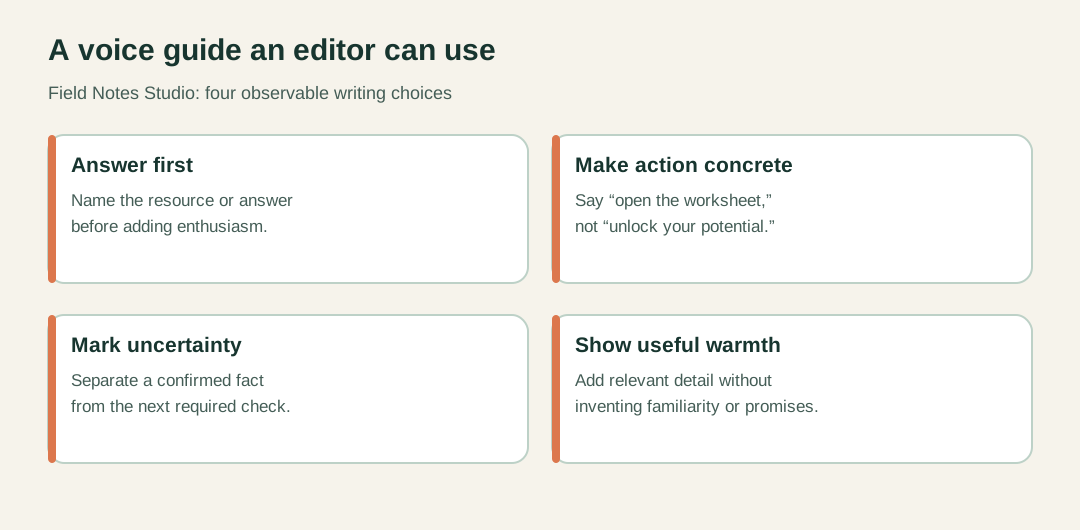
Original editorial example. The guide describes writing decisions, not measured conversion effects.
Keep a short list of promises that need evidence
Flag claims about people, timing, availability and outcomes before saving copy.
Some words deserve review because they imply facts beyond the sentence. “Instant” can imply reliable delivery timing. “Reserved” implies a place has actually been held. “Personalized” suggests information has shaped the response. “Guaranteed” creates an expectation that usually requires much more explanation than a DM provides.
Field Notes Studio keeps a claim column next to proposed copy. The column asks: what would need to be true for this sentence to be accurate? “Your seat is reserved” requires a real reservation. “Our team will reply this afternoon” requires a supported service commitment and someone available to fulfill it. A tone guide cannot supply either condition.
Personalization also needs care. ReplyMagnet's verified {name} personalization uses an Instagram username, not a verified first name. Build copy that reads naturally with a handle, or leave the variable out. Do not write a sentence that depends on knowing someone's real name, purchase history or personal circumstances unless that information is genuinely available and appropriate to use.
Keep the guide connected to current campaign behavior. A welcome-message guide explains that particular entry point, while automation rules cover platform constraints. Neither an appealing voice nor a carefully written message changes what the platform permits.
Review the guide through a disagreement
A useful review ends with a reasoned language decision and an updated example, not a vote on which sentence sounds nicer.
Give two team members the same rough message and ask them to edit it independently. Compare the choices against the four rules. If one writer adds a warm greeting and another removes it, ask whether the reader needs context or already has it. If one promises a quick resolution, ask what evidence supports the timing.
Record the decision only when it teaches something reusable. “Use the resource title before the link” is a rule. “Alex preferred version B” is history. Retain a small set of annotated examples rather than an expanding archive of nearly identical replies.
Review the guide when the business changes its offers, service expectations or audience language. A new workshop may introduce terms that beginners do not understand. A support change may make an old response promise inaccurate. Those events are better reasons to revise the sheet than changing adjectives simply to make it look fresh.
Before saving a campaign message, read it once as the person who asked the question. Can you identify what happened, what to do next and what remains uncertain? Then read it aloud as the business. If the sentence sounds unlike anything a knowledgeable teammate would say, simplify it. The goal is not to imitate spontaneous chat perfectly. It is to make a short, truthful response feel like it belongs to the people behind the business.