Guides
Help digital product buyers reach their first useful task
A buyer may return to Instagram because that is where they first found the product. Their question now is different from a prospect’s request for a preview: they need the right access route, the right version and a clear place to begin.
Published by ReplyMagnet · Last updated
The short answer
Keep purchase and access verification in the store or product system. Use Instagram to explain the next step and route account-specific problems appropriately. A helpful start guide should lead to one useful task without pretending the DM knows the buyer’s payment or license status.
Start freeSeparate the sample from the purchased product
Make the distinction visible in names, links and support instructions so buyers can recognize which artifact they have.
A fictional creator sells a digital illustration workbook and offers a free sample through Instagram. The sample contains one exercise. The paid workbook contains a sequence of lessons and practice pages. Both use similar branding, so a buyer who opens an old DM may mistake the sample for the purchased file.
The creator starts by naming the artifacts clearly. “Illustration workbook sample” and “Complete illustration workbook” are more useful than two files both called “Your creative toolkit.” The difference should remain visible in the document title and on the destination page, not only in an internal filename.
The purchase confirmation should point to the actual paid-access route. The Instagram sample campaign should continue describing the sample accurately. Do not replace a public sample destination with a paid file merely to simplify support; that changes the offer and may expose material outside its intended access process.
The digital-product seller page explains the pre-purchase resource role. Postpurchase onboarding begins with a different responsibility: helping a legitimate buyer use the product they obtained, while leaving purchase verification to the system that can establish it.
Map the ordinary route before writing support copy. Where does confirmation appear? How does the buyer access the product? What identifies the current version? Where can they ask an account-specific question? A clear map prevents Instagram from becoming an improvised substitute for the store's access controls.

Generated editorial illustration of beginning with purchased materials. It is not an actual workbook, buyer or access-verification record.
Try the resource flow for 30 days with 1,000 engagements. No card required.
Start freeKeep verification with the system that records the purchase
Route access problems to the appropriate support process rather than treating a DM claim as proof of payment.
A message saying “I bought this” is a support request, not a verified purchase record. The person may be entirely genuine, but the business still needs an appropriate way to locate the transaction and resolve access. Use the store or product platform's established process.
A general Instagram reply can explain that route without requesting sensitive details in the conversation. For example: “For access to the full workbook, use the support route on your purchase confirmation or our official help page. The team can check the order there.” The exact instruction must match the real store and support setup.
Do not ask for passwords, full payment-card information or login codes in DMs. Do not provide a public paid-download link simply because someone reports a problem. If a limited order reference is needed, collect it through the appropriate support process and only to the extent required.
ReplyMagnet is not being presented here as a purchase-verification, payment-processing or license-delivery system. Its verified conversation capabilities can explain next steps, but they do not establish external payment status. A friendly automation should not say “Your payment is confirmed” unless a separately verified system truly supplies that fact.
Make this boundary understandable to the team as well as the customer. The person answering Instagram can identify the problem category and provide the correct route. The authorized support operator checks the account-specific record and decides what access action is appropriate.
Write a start guide around one successful action
Give the buyer a concrete first task, the materials or access it requires and a clear indication of completion.
The workbook creator's getting-started page begins with a small task: open the first practice page, read the example and complete one line exercise. It does not begin with a long brand story or an index of every possible feature. The buyer needs to orient themselves and start using what they purchased.
State prerequisites plainly. If the exercise is intended for printing, say so. If a digital version requires a compatible application, name the verified requirement in the product documentation. Do not imply that every device can edit a file merely because it can display it.
Show where to begin with descriptive labels. “Start with Exercise 1: line weight” is clearer than “Begin your journey.” W3C's writing guidance supports clear instructions, meaningful links and concise language. Those practices help a buyer locate the task without interpreting promotional wording.
Define a modest completion point. For this example, finishing one practice row helps check that the buyer can begin the exercise. Verify the full-product title, version and access route separately, because a sample may contain the same exercise. It does not prove mastery or guarantee an artistic outcome. The next lesson can build from that point.
Keep the start guide accessible from the product's ordinary home, not only from a disappearing social post. The buyer may return days later through their purchase email or saved bookmark. Instagram can point them toward the guide, but it should not be the only place where essential instructions exist.
Two support replies with different jobs
Use the reported problem to choose a route while avoiding claims about records you have not checked.
Missing access link. An illustrative response is: “You are looking for access to the full workbook. Please use the official help page linked from the store so the team can check the purchase and resend or restore access through the supported process.” This reply acknowledges the request and identifies the responsible route. It does not claim that a purchase was verified or promise a particular resolution before the check.
Wrong version. An illustrative response is: “The free sample and the complete workbook have different titles. If you see ‘sample’ on the file, use the paid-access route from your purchase confirmation. If that route still opens the wrong version, contact the store's support team so they can inspect the account-specific issue.” This helps the person distinguish a common situation without exposing the paid artifact publicly.
Both examples require adaptation to the real product. If the store does not resend access links in that way, do not include the promise. If there is no help page, establish the appropriate support route before advertising one. Good copy cannot compensate for a missing operational process.
Avoid diagnosing the cause prematurely. A missing message could involve a different email address, an incomplete transaction, a filtering issue or another problem. The Instagram reply need not speculate. It should move the request to the place where evidence can be checked.
For general resource issues, the delivery guide is useful. Paid access has additional boundaries, so do not treat a free resource delivery workflow as the complete solution to a purchase problem.
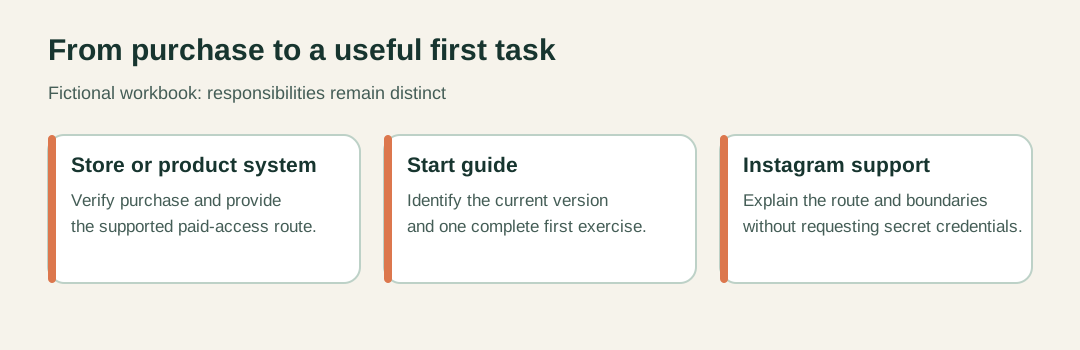
Original postpurchase responsibility map. ReplyMagnet is not a payment or license system.
Fictional workbook support routing. These are checks to perform, not verified purchase records.
Reported problem
Missing access link
- General guidance
- Use the official store help route
- Responsible system or person
- Authorized support checks the transaction
Reported problem
Sample opened after purchase
- General guidance
- Check visible title and paid-access destination
- Responsible system or person
- Store/product system establishes access
Reported problem
Wrong product version
- General guidance
- Record the version shown without exposing private details
- Responsible system or person
- Product owner checks current edition
Reported problem
Cannot begin exercise
- General guidance
- Check prerequisites and first instruction
- Responsible system or person
- Resource documentation or appropriate support
Reported problem
Wants personal critique
- General guidance
- Explain whether that service is included
- Responsible system or person
- Actual product terms and service owner
Make support expectations part of onboarding
Explain what help is available, where it is handled and what the product does not include.
A self-paced workbook may include help with access and file problems without including personal critique. State that distinction in the product's support information. Otherwise, a buyer may reasonably interpret “we are here to help” as a promise of ongoing individual instruction.
Use specific categories. “Access problems,” “file compatibility” and “questions about an exercise instruction” are clearer than a broad promise to solve everything. Where a question falls outside the offer, explain the boundary respectfully and identify any legitimate alternative you actually provide.
Publish response expectations only when the team can support them. A vague claim such as “instant help” can create disappointment when the issue requires a person to inspect an order. If response timing varies, communicate the real process rather than inventing a reassuring deadline.
Keep the public and private routes distinct. General instructions can be answered publicly or linked from a guide. Account-specific details belong in an appropriate private support process. Do not ask someone to post transaction information in a comment to speed up the conversation.
Instagram messaging remains subject to platform constraints. The automation rules guide covers that separate issue. A purchase does not make every possible automated follow-up available through every channel, and this article proposes no unrestricted reminder sequence.
Use repeat questions to improve the product itself
Fix recurring gaps in access, naming or instructions instead of adding more replies around the same confusion.
Keep a small internal record of recurring support categories without copying unnecessary customer details. A rise in “wrong version” questions may point to similar file names or an unclear purchase confirmation. Repeated uncertainty about printing may indicate a missing prerequisite on the product page.
Inspect the underlying route before writing another response. If the official access page is ambiguous, improving that page helps future buyers more than expanding the Instagram script. If the first exercise uses an unexplained term, revise the instruction rather than expecting support to teach it repeatedly.
Test the updated route as a new buyer would experience it using an appropriate controlled account or authorized test purchase process. Verify the confirmation, access destination, current version and first task. Do not use a real customer's account as a convenient demonstration environment.
Keep outcome claims proportionate. Fewer observed questions after a change may be useful information, but it does not automatically prove that the revision caused the reduction or improved retention. Record changes and context so the team can interpret the pattern honestly.
Good onboarding reduces the distance between purchase and a useful first action. Instagram can be a helpful doorway back to support, but the product system should remain the authority for access and the product itself should contain the instructions needed to begin.