Guides
Recognize when an Instagram reply needs a person
“We have received your message” can be a useful acknowledgement. It becomes misleading when the business treats it as the resolution. A customer asking to change a booking still needs someone with the authority and information to handle that request.
Published by ReplyMagnet · Last updated
Look at what the next reply would need to know
A conversation needs a person when a responsible answer depends on account details, judgment or authority the prepared flow does not have. A confident-sounding script cannot replace those requirements.
A workshop date published on the business's website can be answered with a current link. A request to move a paid booking is different: someone must inspect the booking and the applicable process. A complaint about what happened during a class needs another kind of review again.
The distinction is the work required, not whether the message contains a particular emotional word. A polite request may need careful investigation. A frustrated message may only need the opening hours. Read for the requested outcome and the evidence needed to provide it.
The GOV.UK support guidance treats support as a way to help people complete their tasks and use feedback to improve the service. Here, the immediate task is deciding where a prepared answer should stop.
This article describes a manual escalation process using your existing support arrangements. It does not claim that ReplyMagnet automatically assigns tickets, transfers a live conversation to an agent, or supplies a universal inbox.

Editorial illustration of responsibility passing between people and a prepared process, not a product interface.
Make an exception map your team can actually apply
Define which requests can receive a fixed answer, which need clarification and which should go directly to a responsible person. Name the destination for each exception.
Write the map using examples from your actual service. “Complex” is too vague to guide a teammate. “A request to change an existing paid booking” is specific enough to recognize.
For a small workshop business, four categories may be enough. Public information can use a checked answer. An unclear question can receive a short clarification. An account-specific action belongs in the business's support process. A complaint requires someone empowered to review what happened.
Avoid collecting sensitive detail just to decide which category applies. “Is this about an existing booking?” may be enough to choose the support route. The next step can explain where the person should securely provide the details that support genuinely needs.
The map should identify who keeps each answer current. If the public timetable changes, someone must update its destination. If the support channel changes, the handoff message needs the same attention. A flow can be functioning exactly as configured and still direct a customer to an abandoned address.
Illustrative exception map for a workshop business
Request
What dates are available?
- Prepared response can do
- Link to current public schedule
- Manual next step
- None unless the destination fails or question remains
Request
Can I move my booking?
- Prepared response can do
- Explain the actual support route
- Manual next step
- Booking owner checks the individual request
Request
The class was not as described
- Prepared response can do
- Acknowledge the concern without deciding it
- Manual next step
- Responsible manager reviews the complaint
Request
Can you help with this?
- Prepared response can do
- Ask what outcome the person needs
- Manual next step
- Support review if still unclear
Request
Details that should not be public
- Prepared response can do
- Point to the appropriate private support channel
- Manual next step
- Authorized person handles information under the business process
Choose a stopping point before the loop gets longer
Stop a prepared sequence when it cannot resolve the request safely and accurately. Repeatedly asking the same question is not progress toward a human answer.
An unclear first message may justify a clarifying question: “Is this about attending a class or an existing booking?” If the answer still does not fit, provide the support route. Do not send the same menu indefinitely because the person failed to choose a label.
A clear request for a person should also have a usable response. If your actual arrangement is an external contact page, explain that arrangement. “Use this page to contact our studio team” is different from “I have transferred you.” The second sentence describes an action that must truly have happened.
Decide what the customer should expect after using the route. A form may confirm receipt; a support email may be reviewed during stated hours. Only state those facts after the owner has agreed them. This is not the place to invent a fast response promise because it sounds reassuring.
The W3C writing guidance recommends clear instructions and meaningful links. For a handoff, name the destination and what it is for: “Contact the booking team” is more useful than “Click here.” Keep the information understandable even when a reader is annoyed or trying to resolve the problem quickly.
If you are working in a configured flow, check the actual stopping path. Do not assume that adding a support link automatically prevents later promotional messages. Review the messages and connections around that point using the product's current controls.
Pass context without passing speculation
A useful handoff note records the requested outcome, information already supplied, the last promise and the responsible owner. Separate the customer’s words from your interpretation.
The note is for the person who will act. It should help them avoid making the customer repeat a simple explanation, while keeping the record relevant and appropriately restricted. Copying a whole unrelated conversation is rarely necessary.
Use four core fields: requested outcome, known context, last promise, next owner. Add a link to the appropriate internal record only within a system the owner is authorized to use. Leave uncertainty visible rather than filling blanks with assumptions.
These three notes are fictional examples. They do not describe actual customers or tickets.
Booking change note
Requested outcome: customer wants to move an existing workshop booking to another date.
Known context: the customer said the original session is on Saturday; the booking has not yet been verified.
Last promise: directed them to the booking support form; no change or availability confirmed.
Next owner: the person responsible for booking changes, once the request reaches the support process.
Complaint note
Requested outcome: customer wants the studio to review their concern that the class differed from the description.
Known context: concern acknowledged; no determination about the event or remedy made.
Last promise: provided the manager's actual complaint contact route, with its stated response arrangements.
Next owner: manager responsible for complaints. Review facts before discussing a resolution.
Unclear request note
Requested outcome: still uncertain; customer wrote that they “need help with a workshop.”
Known context: asked whether this concerns booking a class or an existing reservation; answer did not resolve that distinction.
Last promise: explained how to contact the studio team; no sales or booking action promised.
Next owner: support reviewer, who should begin by confirming the desired outcome.
Notice what the notes omit: labels such as “difficult customer,” guesses about intent and claims that the issue is already fixed. Those judgments can misdirect the next person before they read the actual request.
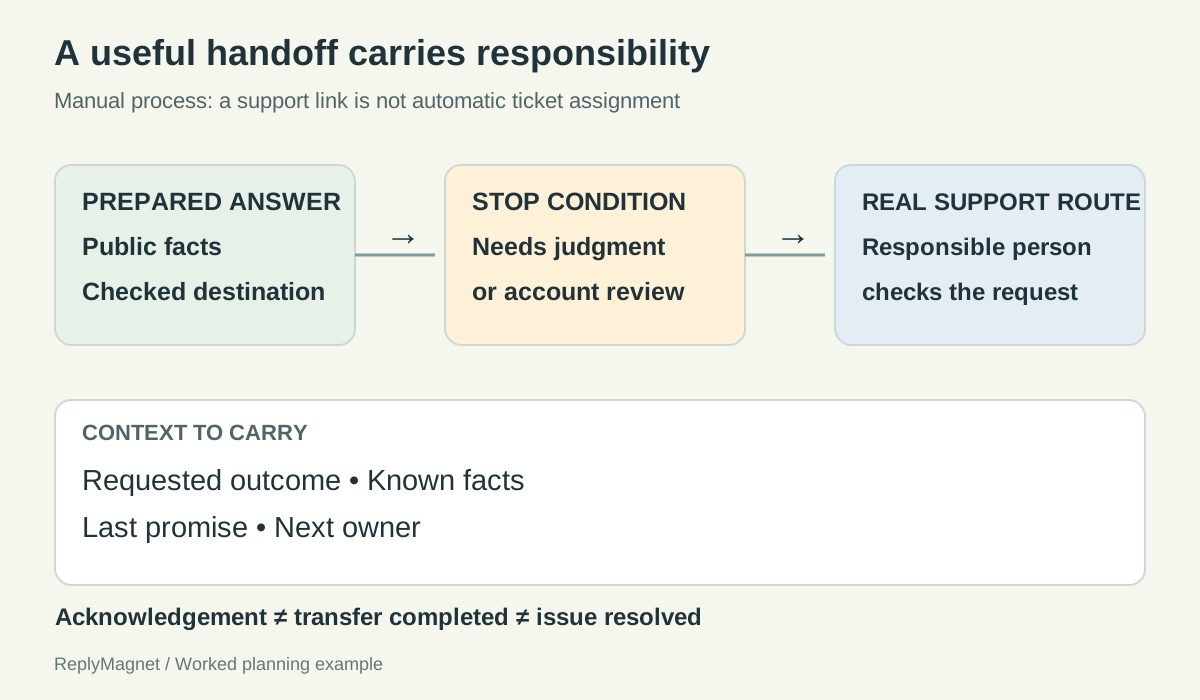
Original manual-handoff map. It does not depict a ReplyMagnet ticket assignment feature.
Rehearse a refund request without deciding refund eligibility
A prepared reply can acknowledge the request and explain the review route. It should not promise or deny a refund before the responsible person has checked the relevant facts and process.
Imagine this invented message: “I couldn't attend yesterday and want my money back.” A weak response might send the standard booking link because it recognizes the word attend. Another weak response might promise a refund without checking anything.
A more careful acknowledgement could say: “You would like the booking reviewed for a refund. Please use our booking support page so the team can find the reservation and review the request.” Use this wording only if that page and review process exist.
Do not ask the person to post their payment details in the public comment thread. Do not ask for a full card number in a DM. The authorized support process should specify what information is needed and where it should be provided.
For rehearsal, ask a teammate to inspect the full path. Can the person identify the right contact route? Does the destination explain what to submit? Does anyone actually monitor it? What happens if the customer replies to the acknowledgement instead of opening the link?
That last question often reveals an ownership gap. If the business only monitors the support form, the message needs to make the next action clear. If someone also monitors Instagram manually, that person needs to know when an unresolved request is waiting. The automation does not establish those responsibilities for you.
Record the rehearsal as a process check. It is not a decision about whether any real customer qualifies for a refund.
Handle an unknown question without inventing an answer
State the limit of the prepared response and provide a real way to get help. One honest unanswered question is preferable to a fluent answer unsupported by the business.
A customer might ask whether a class can accommodate a particular requirement not covered on the public page. The prepared flow should not infer an answer from a general sentence such as “everyone is welcome.” Someone responsible may need to check the facilities or teaching arrangements.
A useful message names the uncertainty: “Our prepared information does not answer that specific question. Please contact the studio through this page so the team can check.” It does not need to apologize repeatedly or make the person complete a sales qualification sequence first.
Keep an internal list of these unanswered categories. Several similar requests may justify improving the public information after a responsible person verifies it. That improvement can make future support easier, but do not convert one uncertain answer into a permanent scripted assurance.
Separate the decision to update content from the decision to close an individual request. Publishing a new FAQ tomorrow does not necessarily resolve the person who asked today. The current owner still needs to follow the actual support process.
Review the handoff as an end-to-end responsibility
A handoff works when the destination is usable, the promise is accurate and someone owns the next action. Sending a link or acknowledgement alone does not prove resolution.
Use a short ownership check before relying on the process: the support destination is current; the required information is proportionate; the next owner knows the route; the wording matches actual response arrangements; and there is a way to notice a broken destination or unresolved exception.
For ReplyMagnet flows, the builder guide explains how to inspect configured paths. Preview is a logic simulation, not evidence that a human received or handled a request. The welcome guide also concerns entry into a conversation, not completion of support work.
After real use, review a small set of exceptions within your authorized records. Check whether customers had to repeat information, whether the route matched the issue and whether the original promise was met. Report unavailable evidence as unavailable, not as a resolved case.
Choose one recurring exception and write its acknowledgement, support route and handoff note today. Test those three pieces together. A clear boundary is useful only when the person can take the next step beyond it.